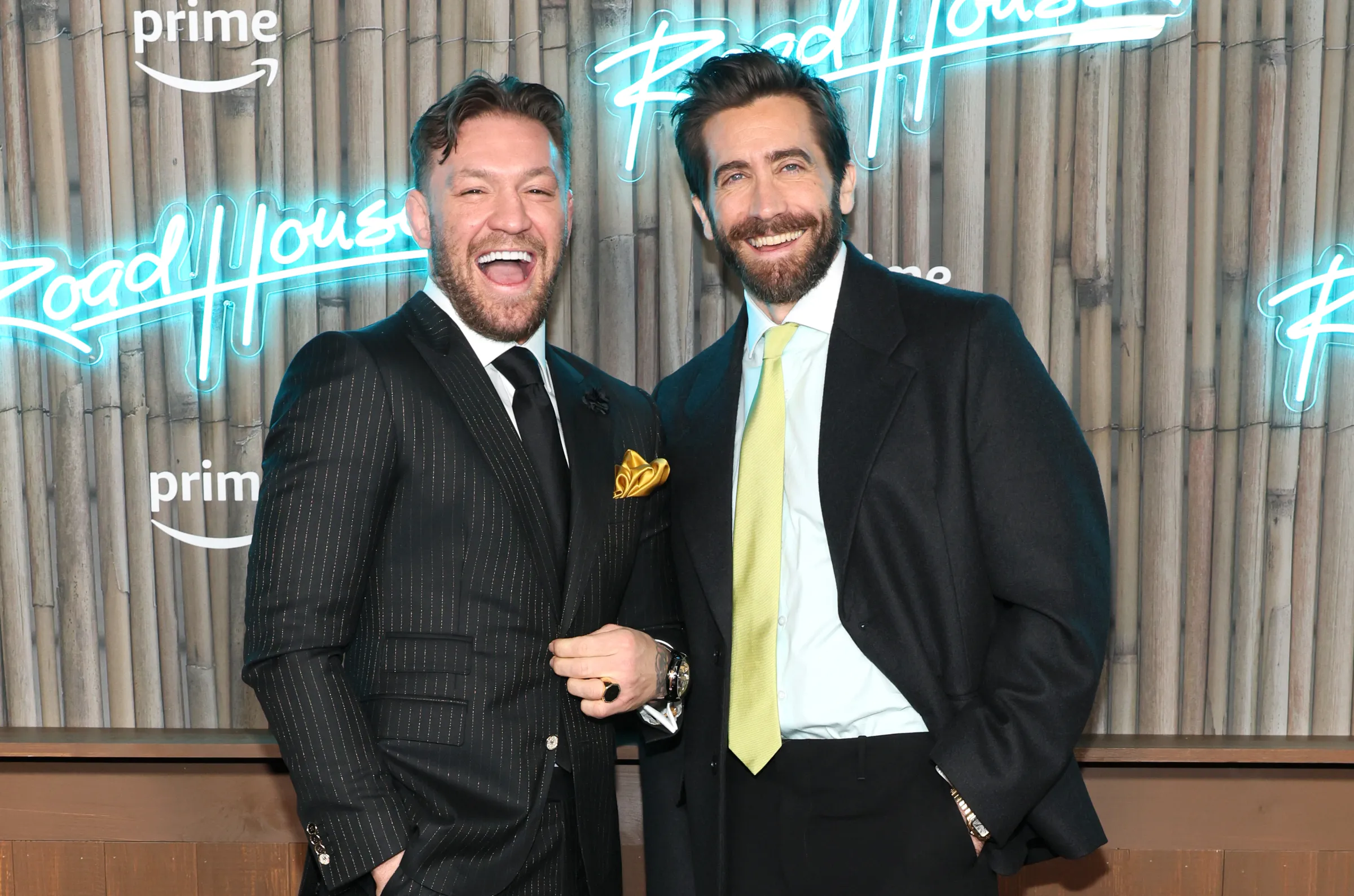
When the Road House premiere arrived in 2024, it carried more than the usual flashbulbs and red-carpet smiles. Conor McGregor, already famous as a prizefighter with a showman’s glare, was stepping into his first major film role. Yet the larger drama belonged not only to McGregor or leading man Jake Gyllenhaal, but to director Doug Liman, who publicly questioned why a movie made with the size, sound, and swagger of the big screen was being sent straight to streaming.
For many viewers who remember the original Road House from 1989, the title itself has a special kind of weathered charm. Patrick Swayze, in his prime, gave the old film its unusual mixture of brawn, romance, and late-night jukebox melancholy. It was the kind of picture people discovered on cable, quoted with affection, and came to regard as a rough-edged keepsake from the final years before Hollywood changed again. The new Road House, with Conor McGregor bursting onto the screen as a wild antagonist, was never going to be quiet.
Doug Liman’s dispute with Amazon MGM touched a nerve because it reached beyond one film. His question was an old-fashioned one, but not an outdated one: what does the silver screen still mean? Those who grew up from the 1950s through the 1990s remember when a movie premiere felt like an event, when marquees glowed over downtown streets, and when the crowd’s laughter or silence could become part of the performance. From Marlon Brando’s intensity to Al Pacino’s brooding fire, from Sylvester Stallone’s underdog triumphs to Tom Cruise’s box-office magnetism, cinema was something people shared in the dark.
Conor McGregor’s Road House debut added its own modern electricity to that tradition. He did not arrive as a polished studio discovery from another era; he arrived with the fame of televised combat, press-conference bravado, and a face audiences already knew. In the film, his presence is deliberately untamed, a reminder of the larger-than-life screen villains who once made crowds lean forward in their seats. Whether one saw him as a natural performer or a spectacle imported from another arena, McGregor gave the premiere a charge Hollywood has always understood: curiosity sells tickets, and personality fills the room.
Still, the debate around the Conor McGregor Doug Liman Road House premiere was not simply about nostalgia for nostalgia’s sake. Streaming has brought convenience, reach, and comfort, especially for audiences who enjoy watching from home. But Liman’s protest asked whether certain films lose something when they bypass the communal ritual of theatrical release. A punch sounds different through theater speakers. A gasp travels differently through a packed house. Even a flawed movie can become memorable when experienced with strangers reacting in unison.
That is why this story lingers. Road House in 2024 became more than a remake; it became a small but telling chapter in Hollywood’s long conversation with itself. Conor McGregor made his film debut, Doug Liman defended the grandeur of theatrical cinema, and audiences were invited to consider what they still value in the moviegoing experience. Perhaps the answer lies somewhere between the old marquee and the living-room screen. But for those who remember the glow of a Saturday night cinema, the argument feels deeply familiar, and warmly worth having.