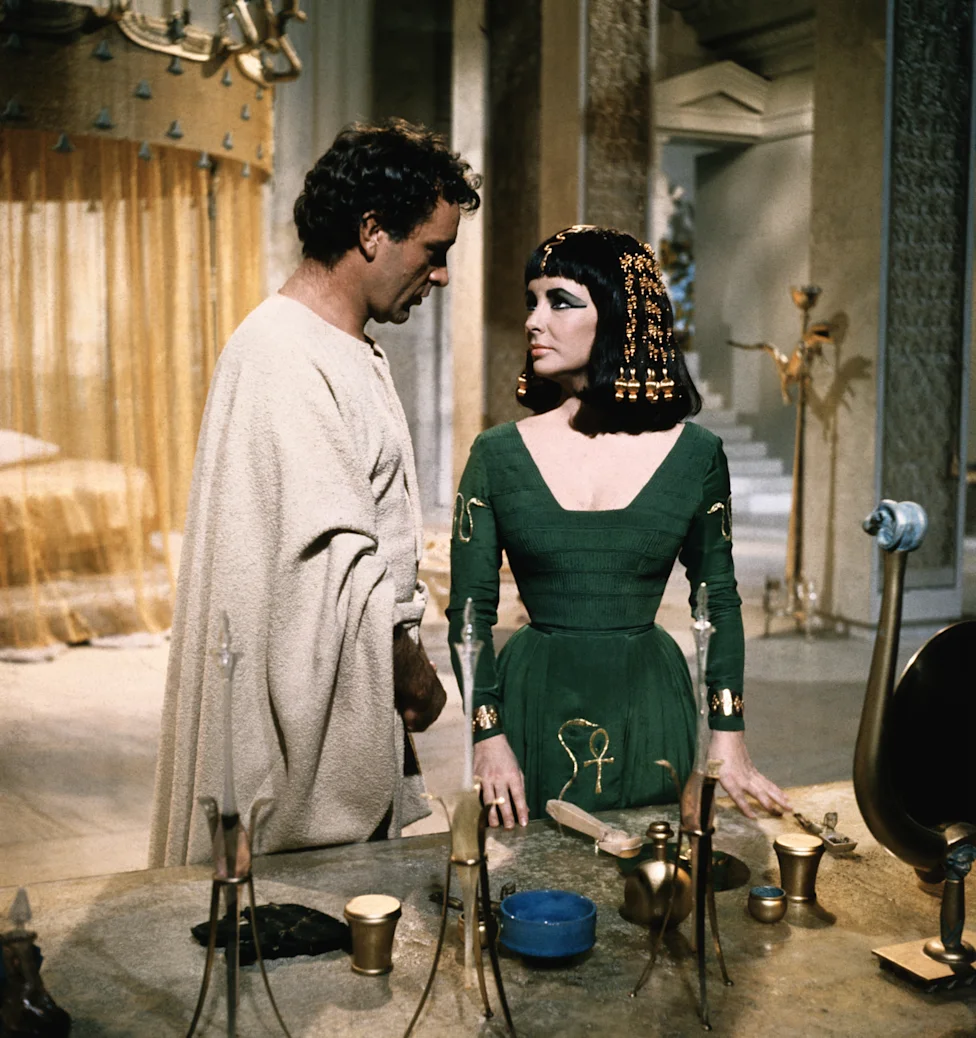
In the golden tapestry of mid-century Hollywood, there are few stories as magnetic as the legendary production of Cleopatra. As we look back from the vantage point of 2026, the year 1963 stands out as a watershed moment for the silver screen. It was an era when the industry was shifting from the rigid studio system toward a more extravagant, bold, and risk-taking landscape. At the heart of this spectacle stood Elizabeth Taylor, a woman whose beauty and talent defined a generation, and whose professional audacity forever altered the business of film.
When Elizabeth Taylor agreed to star as the Queen of the Nile, she negotiated a salary of one million dollars. In the early 1960s, such a figure was unheard of, shattering every financial ceiling in the industry. It was more than a paycheck; it was a testament to her status as the ultimate global icon. The production itself became an emblem of Hollywood excess, with its sprawling sets, thousands of costumes, and logistical nightmares that threatened to bankrupt the studio. Yet, the chaos on screen was only matched by the intensity of what happened behind the scenes.
It was during this monumental production that the world witnessed the tempestuous and fiery romance between Elizabeth Taylor and Richard Burton. Their love affair was as epic and tragic as the history they were reenacting. For those of us who grew up in the shadow of this golden age, the chemistry between Taylor and Burton felt like a piece of living history. They brought a sense of danger and genuine human passion to the screen that is often missing in the digitized films of today. Their off-screen narrative became inextricably linked with the film’s identity, turning it into a cultural phenomenon that transcended traditional cinema.
Looking back, the grandeur of Cleopatra represents the peak of the studio epic. It was the last great gasp of a certain type of old-world filmmaking, where every detail was painted on an enormous canvas. Elizabeth Taylor navigated this pressure with a poise that remains deeply impressive. She was not just a performer; she was a force of nature who demanded respect and commanded the attention of the entire world. Her legacy, defined by this daring million-dollar gamble, serves as a reminder of a time when movie stars possessed a mythic quality that felt both unattainable and profoundly moving.
The resonance of Elizabeth Taylor and her work during this transformative period continues to speak to us today. It reminds us of a time when the cinema experience was a collective event, a grand evening out that felt like an occasion. We invite you to remember those flickering lights and the heavy velvet curtains of the theaters we frequented in our youth. Elizabeth Taylor remains a symbol of an era that valued both the artistry of the craft and the sheer, unadulterated magic of the star system. May we always keep the memory of these legends alive in our hearts.