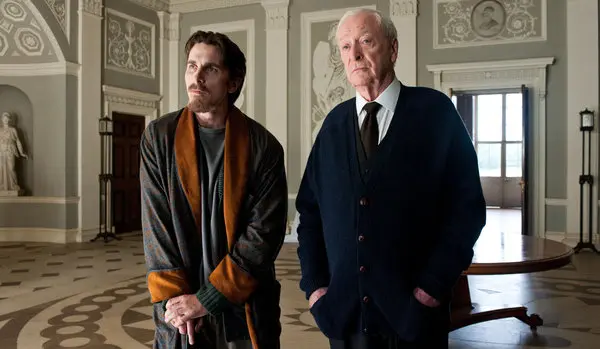
There is a specific kind of magic that occurs when two creative minds from different generations find a shared wavelength. For those of us who grew up in the golden age of cinema, watching the transition from the grounded performances of the fifties and sixties to the complex narratives of the new millennium has been a remarkable journey. In 2005, a partnership emerged that felt like a bridge between these two worlds: the collaboration between the visionary director Christopher Nolan and the quintessentially British icon, Michael Caine. It was not merely a professional pairing; it was a testament to the enduring power of classic craftsmanship in a modern era.
When we look back at the cinematic landscape of the twentieth century, Michael Caine stands as a titan. From his breakthrough roles in the sixties to his commanding presence in the following decades, he embodied a certain gravitas and charm that is rarely replicated. When Christopher Nolan began his ascent into the world of major blockbusters, he wisely reached for that bridge to the past. Casting Michael Caine as his lucky charm was more than a nod to nostalgia; it was a declaration that even in the most ambitious, high-concept spectacles, the heart of the film must be rooted in human emotion and disciplined, traditional acting.
Throughout their eight-film odyssey, starting with the revitalization of the caped crusader in 2005, Michael Caine provided a grounding force. He brought the refined sensibility of the sixties to stories that were often sprawling, complex, and technologically daring. For many of us who remember the subtle intensity of films from the fifties and seventies, seeing an actor of Caine’s caliber hold his own against the cutting-edge visuals of Christopher Nolan felt like a homecoming. It reminded us that the soul of cinema remains unchanged, regardless of how much the technology behind the lens evolves.
What made this partnership so resonant was the deep mutual respect between the director and the performer. Christopher Nolan understood that while special effects could dazzle an audience, it was the voice, the cadence, and the weary wisdom of an actor like Michael Caine that would make those moments linger in our hearts long after the credits rolled. In many ways, their work together honored the greats of the past—men like Marlon Brando or Al Pacino—who taught us that the most powerful thing an actor can do is simply exist truthfully within the frame.
As we reflect on the state of film in 2026, it is easy to miss the elegance of the eras that shaped our youth. Yet, when we watch these collaborative masterpieces, that sense of wonder returns. The partnership of Christopher Nolan and Michael Caine serves as a beautiful reminder that while the industry changes, the essence of storytelling remains constant. It is an invitation to revisit those classic performances, to appreciate the craft, and to celebrate the enduring legacy of the actors who defined our lives.