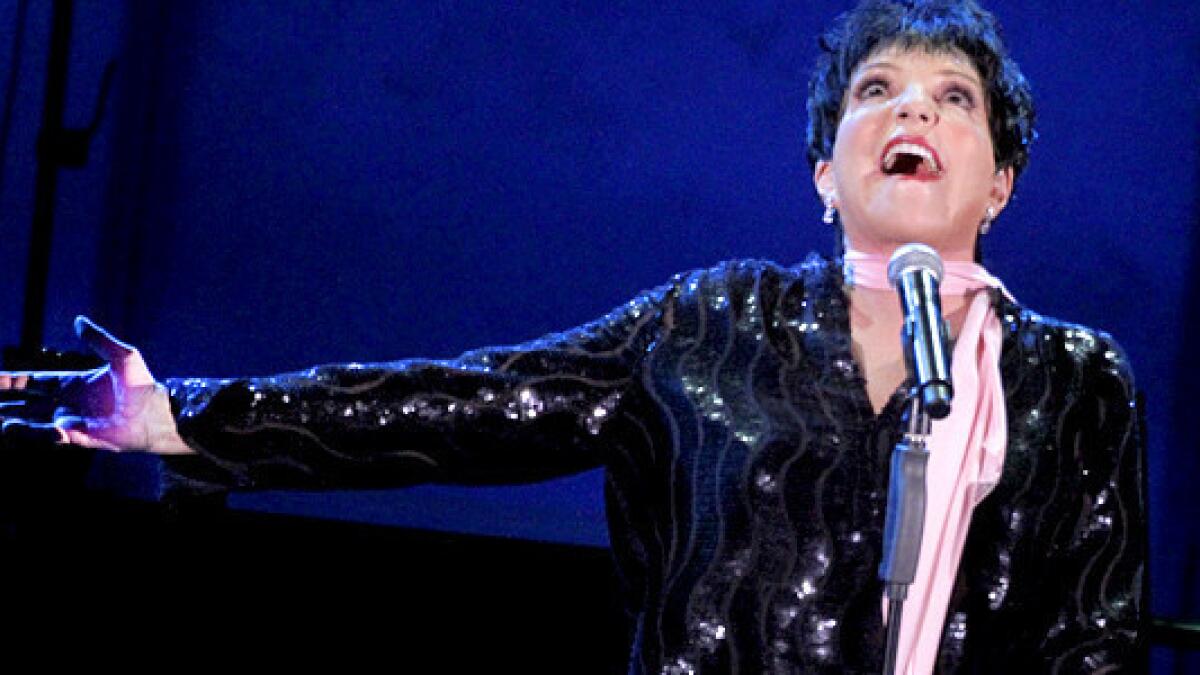
The year was 1973. The air in the Dorothy Chandler Pavilion was thick with cigarette smoke and the suffocating scent of expensive perfume, while millions watched on their television sets at home. When the name Liza Minnelli was announced as the winner for Best Actress, she didn’t just walk up to the stage; she emerged from the longest, darkest shadow in Hollywood history. For years, the world had seen her only as the daughter of the legendary Judy Garland, a girl forever dancing in the periphery of a fading star. But that night, as the golden statuette rested in her hands, she wasn’t just a daughter anymore. She was a powerhouse, the undisputed face of the Cabaret era, forever cementing her place in the pantheon of American musical icons.
Yet, the glitter of the sequins and the thunderous applause masked a haunting reality that few understood. To reach that podium, Liza Minnelli had sacrificed more than just her youth to the industry. The ghosts of the Golden Age still haunted her, and the pressures of living up to a mythic legacy had pushed her to the very edge. While the rest of the world was transitioning from the psychedelic haze of the late sixties into the high-octane glitter of the seventies, Liza was fighting a solitary war against expectation, grief, and the relentless demand for perfection. The irony of her success was that as she finally stepped into the spotlight as an individual, she felt more isolated than ever.
Her performance in Cabaret wasn’t merely acting; it was an exorcism. Every sharp movement, every belted note, and every flicker of defiance in her eyes told the story of a woman refusing to be broken by the ghosts that defined her mother’s tragic downfall. She became a symbol for a generation that was beginning to move away from the folk-rock idealism of Woodstock and into a more cynical, neon-soaked reality. She was the icon of the Studio 54 era before the disco ball even dropped, embodying a frantic, desperate energy that resonated with anyone who had ever felt like an outsider in their own life.
We look back at 1973 now as a pivot point in pop culture, a moment when the torch was passed from the old guard of Hollywood to a new, complicated breed of stardom. Liza Minnelli brought a raw, dangerous vulnerability to the screen that felt like a sharp departure from the polished studio system of the past. Her struggle with the pressures of fame remains a mirror for us today, reminding us that for all the allure of the limelight, the price of being a legend is often paid in the currency of one’s own soul.
Even decades later, there is something profoundly moving about watching that footage of her win. It is a reminder that behind every legendary performance lies a human story of survival. The world may have wanted to remember the mother, but that night in 1973, Liza Minnelli ensured that we would never forget the daughter. As we sift through our memories of that electric decade, we are left wondering how much more she held back, and how much of that brilliant, shimmering mask was simply a shield against the world. Do you remember the moment the world finally saw her?