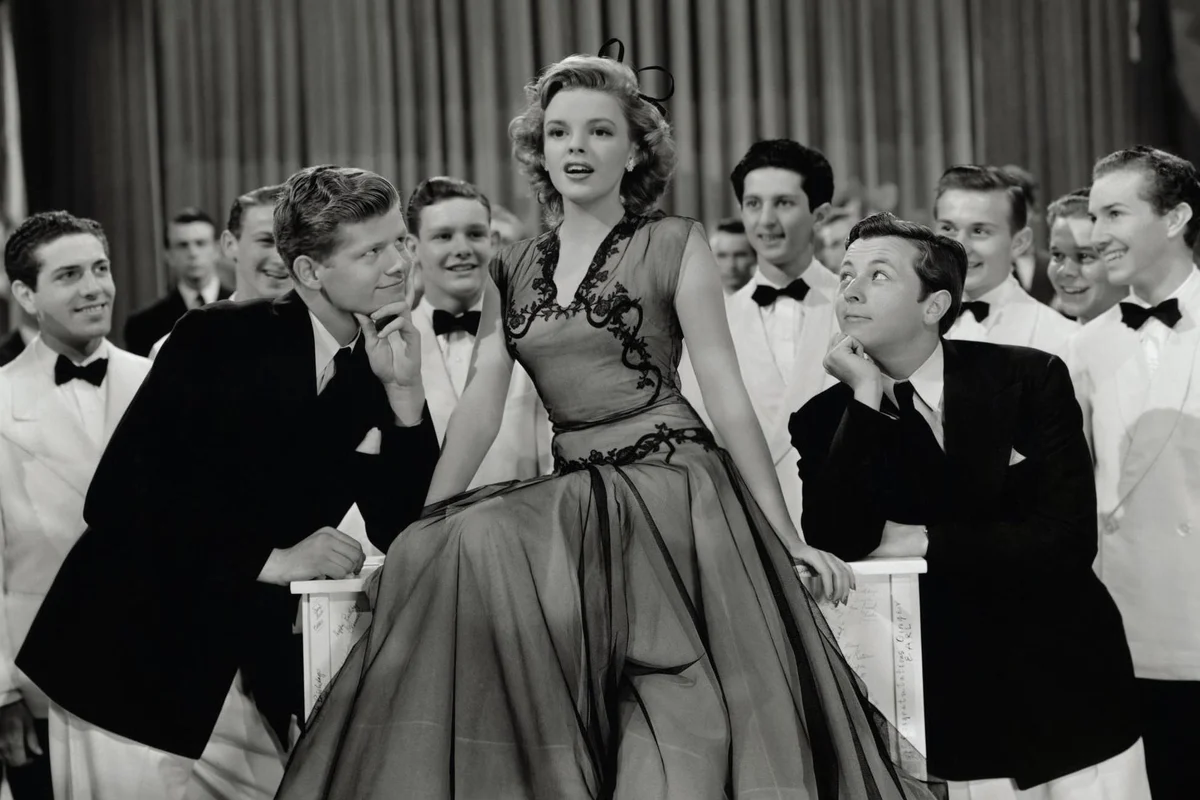
In the spring of 1961, the world believed they were witnessing the final act of a fading star. Judy Garland, the golden girl who had once defined the magic of the silver screen, was physically shattered. Riddled with health complications, struggling with years of dependency, and financially destitute, the industry had all but written her obituary. The glittering lights of Hollywood felt a lifetime away, and the press was circling, waiting for the inevitable collapse. Yet, on that fateful April evening at Carnegie Hall, Judy Garland did not just perform; she staged a resurrection that would echo through the decades as the greatest night in show business history.
To understand the magnitude of this performance, one must look back at the era. This was a time when the Jukebox was the heartbeat of American culture, and the mystique of a live concert was raw and unfiltered, long before the digital polish of the modern MTV age. As Judy Garland stepped onto the stage in that iconic gown, the air in the room was thick with a mixture of pity and morbid curiosity. The audience was a microcosm of a weary, post-war America—folks who had grown up with her, suffered alongside her, and were now braced for a tragic end to a legendary life.
What followed defied all medical logic and public expectation. For over three hours, Judy Garland commanded the stage with a ferocity that seemed to draw energy from the very rafters of the venue. She was no longer just an actress; she was a conduit for the collective pain and resilience of a generation. When she belted out classics, her voice cracked with an authenticity that no studio recording could ever replicate. It was a visceral, emotional confrontation with her own demons, turning her fragility into a weapon of pure, unadulterated art that left the audience in a trance of tearful adoration.
This night became more than a mere concert; it became a cultural touchstone. It solidified her status as a patron saint of the broken and the beautiful. While history often focuses on the dark, sensational headlines surrounding her struggles with substance abuse and industry pressure, that night proved that Judy Garland possessed an unbreakable spirit. She transformed her personal hell into a communal catharsis, proving that even at the edge of the abyss, one can still reach for the stars. The recording of that show would eventually become a gold-certified album, capturing a lightning-in-a-bottle moment of musical history.
Today, the legacy of Judy Garland continues to resonate, reminding us that true greatness is rarely found in perfection, but in the willingness to be vulnerable. She paved the way for every raw, confessional artist who followed, from the rock icons of the seventies to the vocal powerhouses of today. As we look back through the fog of time, her performance at Carnegie Hall stands as a testament to the power of the human spirit. Whenever the lights dim and the music fades, we can still hear the echoes of that triumphant night, where a woman who was supposed to be finished taught the world exactly what it meant to be immortal.