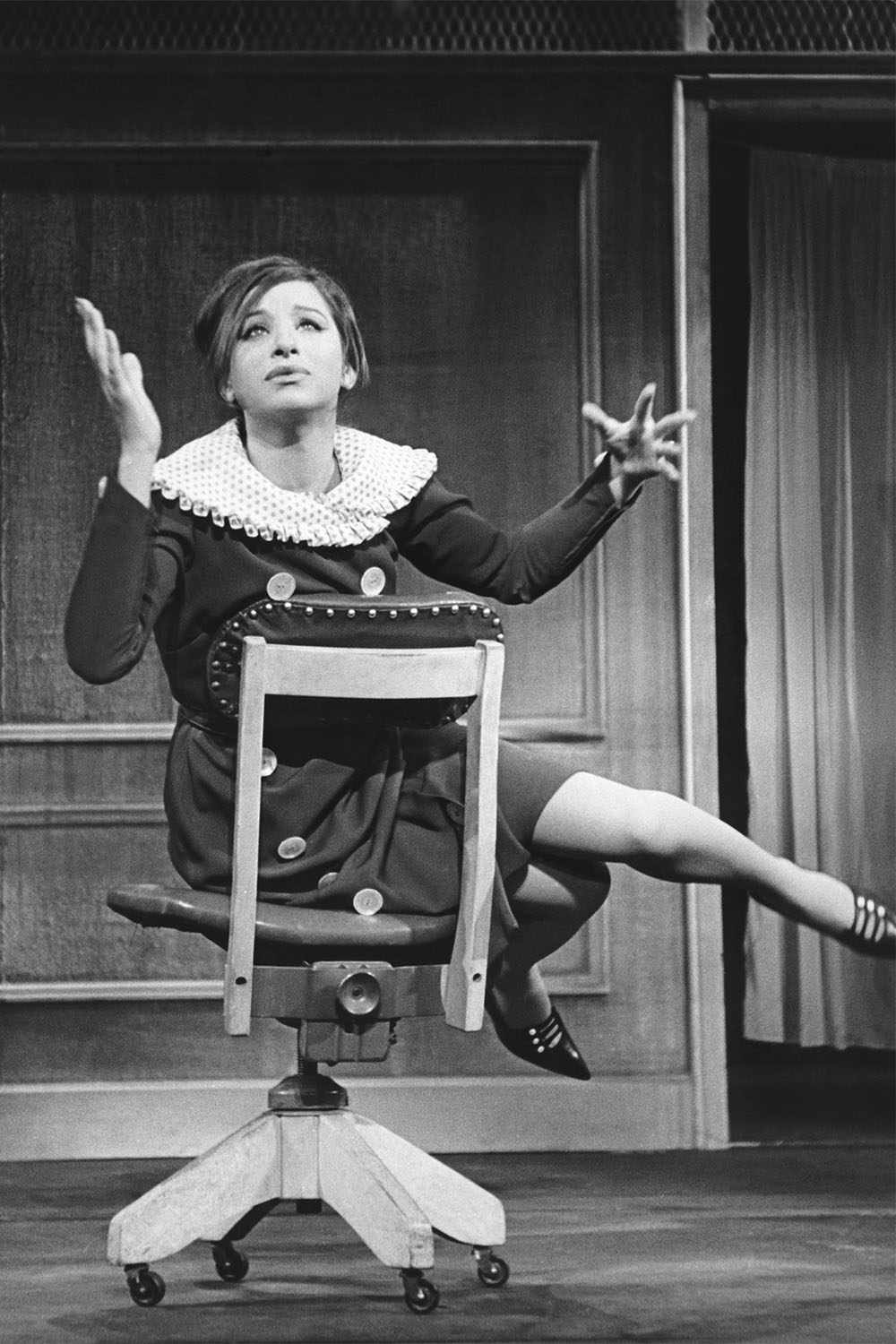
The mid-1980s was an era defined by the frantic pulse of the synthesizer and the neon glow of MTV. It was a time when the Jukebox no longer hummed with the rich orchestrations of the past, but instead vibrated with the mechanical, catchy precision of synth-pop. Executives in the music industry had reached a cold, hard consensus: Broadway was officially dead. They told Barbra Streisand that her classic sensibilities were out of touch, relics of a bygone age that no longer held a place in the high-energy, digital-first landscape of 1985. But Barbra Streisand, ever the visionary, had a secret plan that would silence the skeptics and rewrite her own musical history.
While the rest of the world was obsessed with electronic drum beats and hairspray-soaked anthems, Barbra Streisand retreated to the studio with a bold, almost reckless ambition. She decided to lean into the very sound they claimed was obsolete. The result was the 1985 masterpiece, The Broadway Album. It was not merely a collection of show tunes; it was a defiant statement of artistic identity. By choosing to interpret the Great American Songbook at a moment when the industry was pivoting toward disposable pop, Barbra Streisand proved that true quality possesses a timelessness that fads simply cannot touch. She stripped away the trend-chasing production, letting her voice—the most powerful instrument in the room—do the heavy lifting.
The recording process was fraught with the high-stakes drama typical of a perfectionist at the peak of her powers. Studio insiders whispered about her relentless attention to detail, as she pushed engineers and musicians to capture a nuance that modern pop lacked. She wasn’t just making an album; she was preserving a cultural heritage that felt like it was slipping through the cracks of the decade. When the record finally hit the shelves, the initial hesitation from label executives transformed into sheer astonishment. The Broadway Album didn’t just sell; it dominated the charts, eventually claiming the number one spot on the Billboard 200 and proving that a legendary talent could command the public’s attention regardless of what the radio format dictated at the time.
Looking back, the success of this project serves as a profound reminder of the friction between artistic integrity and commercial trends. In an era dominated by the Walkman and the rising dominance of music videos, Barbra Streisand offered an intimate, cinematic experience that required listeners to sit down and actually pay attention. It remains a testament to her refusal to conform, standing as a landmark achievement that saved the spirit of Broadway in the collective consciousness of a generation that almost forgot it.
Today, the legacy of this risky venture continues to resonate with those who miss the craftsmanship of the past. Barbra Streisand taught us that when you trust your instincts against the overwhelming noise of the industry, you don’t just survive the changing times—you define them. The next time you find yourself scrolling through the endless digital archives of modern music, pause for a moment to remember the woman who looked at the dying embers of a musical genre and turned them into an enduring, gold-certified flame.