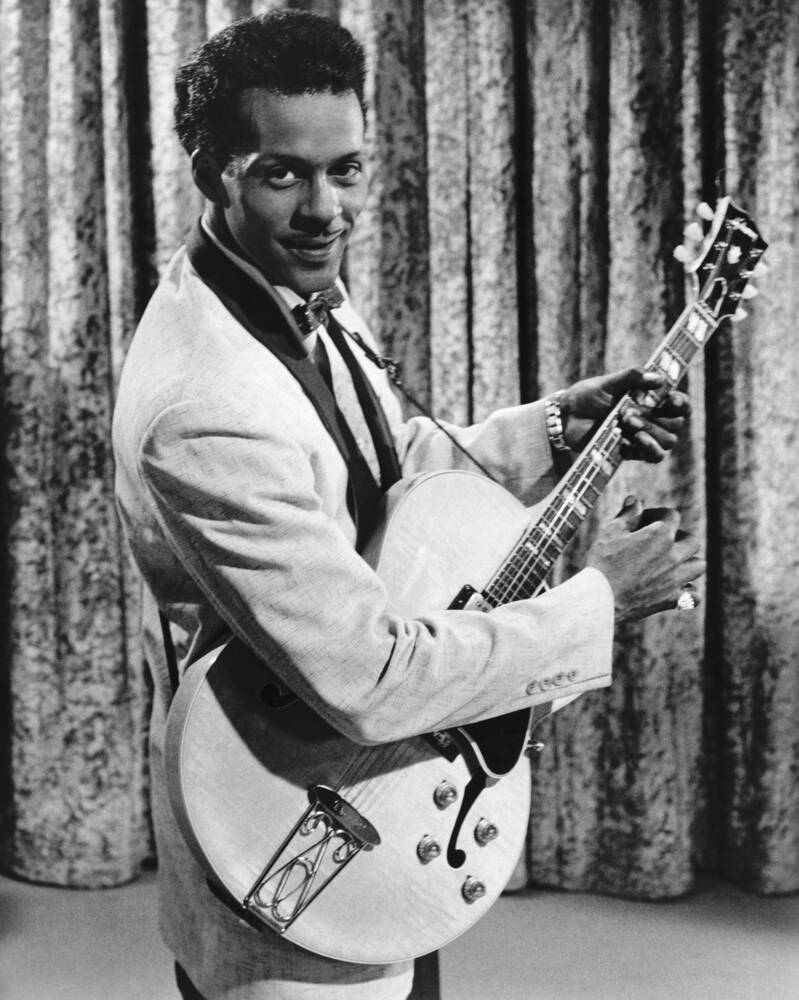
In the smoky ambiance of the Paramount Theatre in 1956, a wardrobe malfunction took center stage, giving birth to one of rock and roll’s most iconic moves: the duck walk. Chuck Berry, the pioneering legend, bent his knees to adjust his suit mid-performance, a moment of vulnerability that erupted into sheer electrifying energy. This unexpected crouch became a defining moment, forever altering the landscape of stage performance and turning Chuck into an unforgettable symbol of the rock genre.
Chuck Berry was not just a performer; he was the architect of rock and roll, infusing rhythm and storytelling into a burgeoning music scene. His hits like “Johnny B. Goode” and “Roll Over Beethoven” transformed the lives of young Americans and painted the vibrant soundscape of the 1950s. With his guitar slung low and a playful grin, Berry mastered the stage, but it was this one particular fluke that added a new layer to his already dynamic persona. As the crowd at the Paramount erupted in applause, they unwittingly became witnesses to history.
The atmosphere of the 1950s was ripe for change. Rock and roll broke through racial barriers, uniting teenagers from different backgrounds on dance floors, jukeboxes, and sock hops. It was a rebellion against the norm, a sound that empowered youth and defined a generation. Chuck Berry was at the forefront of this movement, his blend of rhythm and blues resonating deeply across America, setting the stage for future legends. His connection to the cultural zeitgeist of the time made his occasional missteps—like the famous duck walk—symbols of artistry and innovation.
Berry’s mishap became more than just a funny story. The duck walk symbolized the spontaneity of live rock performances, capturing the unpredictable thrill that audiences craved. Other musicians and performers saw the influence of Berry’s style, incorporating his outrageous physicality into their acts. The move inspired countless artists from Elvis Presley to Jimi Hendrix, cementing Chuck’s influence on rock culture.
Yet, the duck walk and Berry’s legacy also carry an undercurrent of tragedy. Behind the scenes, the rise to fame brought intense pressure, and Chuck faced personal controversies that threatened to overshadow his musical achievements. Moments like these remind us of the darker side of fame—a stark contrast to the joyous sound of the music that defined an era. Berry’s life became a chronicle of triumph tempered with struggles, echoing the stories of many iconic musicians.
As the 1960s approached, Chuck Berry’s contributions continued to resonate, influencing the arena rock and psychedelic sounds that filled the air. His stories—a mixture of personal drama, exhilarating performances, and cultural impact—remind us why we keep revisiting the golden age of rock. The duck walk, born of an unintentional moment, embodies how a single instance can change the context of a musical revolution.
Today, Chuck Berry’s duck walk is more than just a dance move; it’s a reminder of the unpredictability of live music, the joy of spontaneity, and the lasting legacy of a true rock and roll pioneer. As we celebrate the past, we can only applaud the sheer brilliance that was Chuck Berry, forever moving to the rhythm of his time.