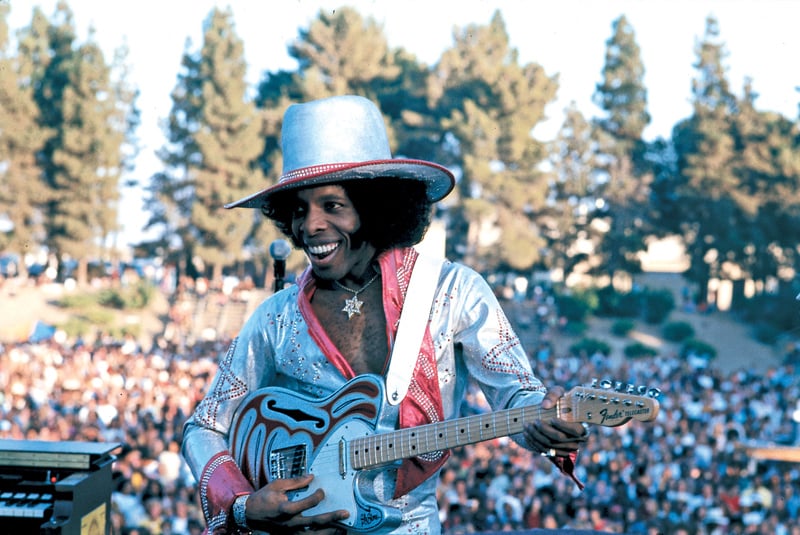
In the early hours of August 16, 1969, the air at Woodstock felt thick with anticipation, yet a blanket of sleep still shrouded the festival grounds. The crowd, weary from days of music and camaraderie, could hardly imagine the electrifying performance that was about to unfold. It was 3 a.m. when Sly Stone took to the stage, and with him, he carried the weight of a musical revolution that would wake the dead and change the landscape of American music forever.
Sly Stone, the larger-than-life frontman of Sly and the Family Stone, was known for his ability to mix genres seamlessly—melding rock, soul, funk, and psychedelic influences into a sound that felt both fresh and timeless. His unique approach to music, coupled with an eclectic mix of band members that showcased racial and gender diversity, was a reflection of the social change brewing in America. Yet on that fateful night, none of this was on the minds of the few thousands who remained at the festival, barely keeping their eyes open.
Then came the moment. With a mixture of vibrant colors and captivating rhythms, Sly Stone stepped onto the stage. He opened with the hit single “I Want to Take You Higher,” a chorus that would soon ripple through the crowd like an electric current. The audience, once sleepy, was immediately pulled into a wild, euphoric frenzy as Sly’s powerful voice filled the air. His performance went from a mere show to a galvanizing experience—a call to arms for those hungry for change.
The impact of Sly’s performance was profound. It wasn’t just a concert; it was a rallying cry amid a turbulent period in American history marked by civil rights struggles and anti-war protests. The 1960s had seen music become a powerful tool for expression and protest, and Sly’s set at Woodstock encapsulated this spirit perfectly. The way he commanded the stage and ignited passion in the hearts of the audience created a moment impossible to forget. Even at 3 a.m., darkness turned to light, and apathy transformed into excitement.
However, like many tragic stories within the realm of fame, Sly’s trajectory was not without its shadows. As the years progressed, Sly faced personal battles with addiction and internal conflicts that would affect his music career and relationships with fellow band members. The radiant energy that defined his music began to fade as those who watched him rise to prominence saw him grapple with the very fame he had earned. Yet through it all, the essence of Sly Stone—the artist who brought joy and revolution to the stage—remains a vital part of American musical history.
Today, Sly Stone reminds us of the power of music to transform lives and inspire change. His electrifying set at Woodstock not only cemented his legacy but also serves as a reminder of what it means to rise above life’s struggles and create a moment that resonates across generations. The memory of that 3 a.m. performance continues to linger, a testament to the unique, ever-curious soul of an artist who woke a generation and shook it awake.
As we look back, we celebrate the history, the drama, and the undying spirit of Sly Stone—a true pioneer whose contributions to music and culture are as significant now as they were over fifty years ago.