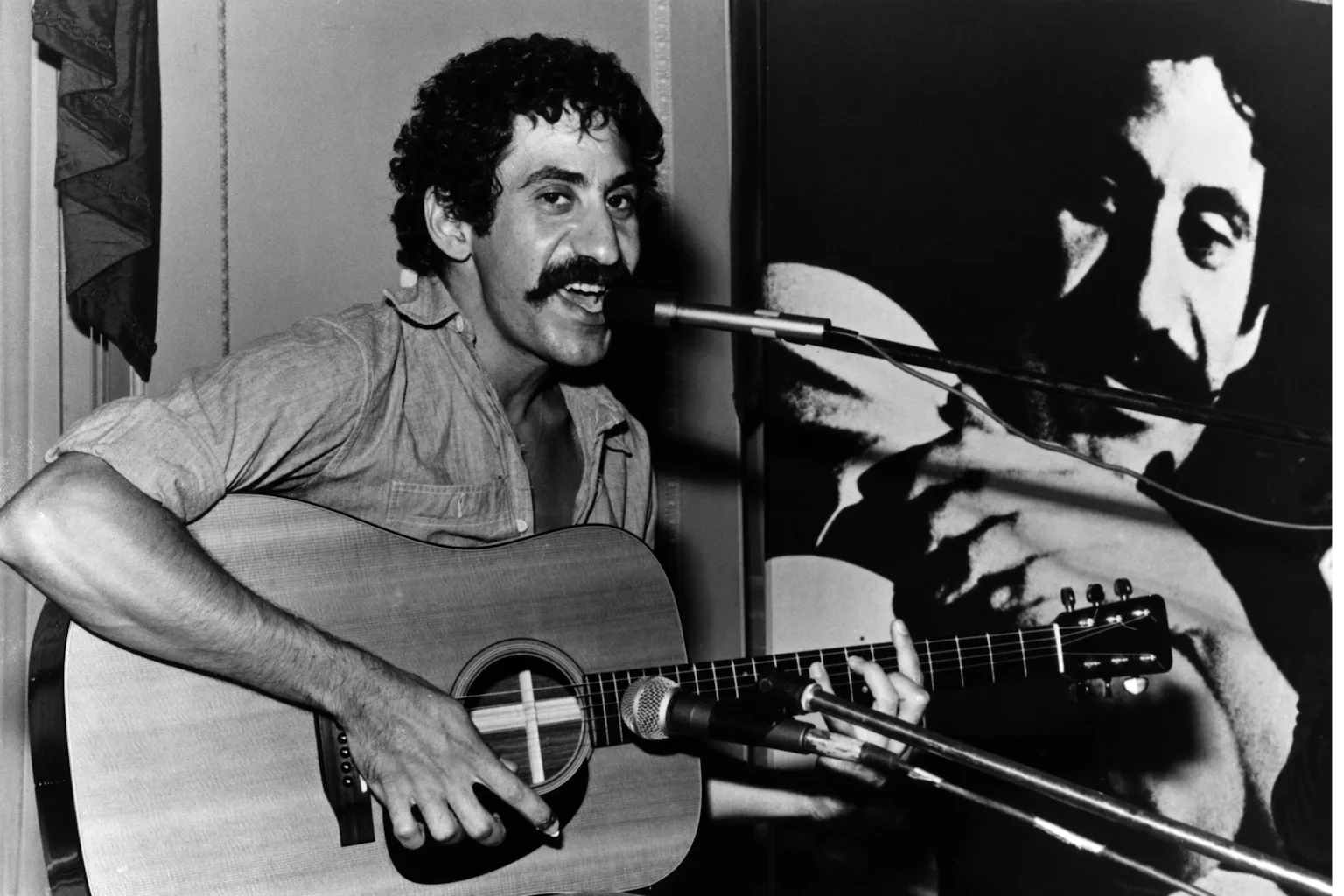
It was the golden era of the acoustic guitar, a time when the AM radio airwaves were ruled by the raw, poetic sincerity of folk-rock. Jim Croce and John Denver were the undisputed poets of this generation, their voices serving as the soundtrack for millions who dreamed of quiet country roads and long-distance lovers. Yet, beneath the warmth of their melodies, a chilling, invisible thread tied these two legends together. Both men, who captured the essence of life on the ground, were ultimately claimed by the very sky they sang about in their soaring, hopeful choruses. The haunting symmetry of their final moments remains one of the music industry’s most sorrowful and unsettling coincidences.
Jim Croce was a storyteller who understood the grit of blue-collar life. With songs like Operator and Time in a Bottle, he possessed an uncanny ability to turn melancholy into a chart-topping hit. In September 1973, just as he was on the precipice of true superstardom, his light was extinguished in a tragic plane crash in Natchitoches, Louisiana. He was only thirty years old. The news sent a shockwave through a nation that had just begun to embrace his humble, authentic persona. It felt as though a light had been snuffed out prematurely, leaving the world to wonder what other timeless classics were buried in that wreckage.
Twenty-four years later, history repeated its cruel script. John Denver, the man who made the Rocky Mountains feel like home to people who had never stepped foot in Colorado, met an identical fate. Denver was a pilot himself, a man who found liberation in the cockpit of his experimental aircraft. But in October 1997, the sky that had inspired his greatest anthems became his final destination off the coast of Monterey, California. The loss of John Denver felt like the end of an era; he was the last of the seventies troubadours, a cultural icon whose songs about sunshine and wind had provided a sanctuary for the weary for over two decades.
The connection between Jim Croce and John Denver transcends their music. They both represented an era when songwriting was defined by vulnerability rather than production polish. While the disco era of Studio 54 was rising and the loud, neon-soaked glam metal of the eighties was waiting in the wings, these men remained grounded in the simplicity of a wooden guitar and a honest lyric. Their untimely departures solidified their status as legends, forever freezing their art in a state of eternal, youthful optimism.
Today, when you hear a crackling vintage record playing through a dusty jukebox, the ghosts of Jim Croce and John Denver still linger in the room. We don’t just listen to their music; we mourn the lives they would have lived and the stories they never got to tell. Their legacy serves as a somber reminder that even the most soaring melodies can be silenced by the unpredictable nature of fate. As the sunset fades behind the horizon, their songs continue to echo, whispering stories of home, heartbreak, and the vast, beautiful sky that both gave them a voice and took it away.