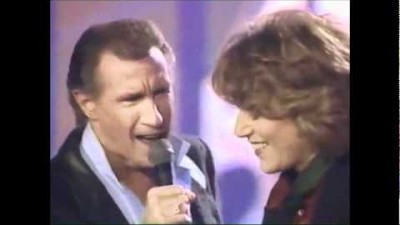
By 1987, the golden age of the jukebox had long since faded into the background of a world obsessed with MTV and synthesizers. For Bill Medley, the velvet-voiced titan of the Righteous Brothers, the music industry felt like a closed door. The man who once defined the blue-eyed soul of the sixties found himself an aging relic in a landscape that had little room for the echoes of yesterday. He was fading into obscurity, his legacy relegated to golden oldies stations, waiting for a spark that seemed destined never to return. He had nearly resigned himself to a life outside the limelight, unaware that a low-budget romantic drama would soon become the unexpected catalyst for one of the greatest comebacks in rock history.
The miracle arrived in the form of a film called Dirty Dancing. While the studio had low expectations for the movie, the soundtrack was a different story. Producers were scrambling for a centerpiece, a song that could capture the raw, yearning electricity of the screen. They turned to Bill Medley, but the project felt like a long shot. He was paired with the incredibly talented Jennifer Warnes, a vocalist whose precision and warmth perfectly balanced his deep, gravelly baritone. Neither of them could have predicted that (I’ve Had) The Time of My Life would become more than just a soundtrack contribution; it would become a cultural phenomenon that redefined their respective careers overnight.
Stepping into the recording studio, the chemistry between Bill Medley and Jennifer Warnes was electric, despite the uncertainty surrounding the film’s success. The song was a massive departure from the experimental synth-pop sounds dominating the late eighties airwaves. It was an unapologetic, sweeping ballad that tapped into a universal nostalgia for timeless romance. When the movie hit theaters, the world went into a frenzy. The song shot to the top of the charts, thrusting Bill Medley back into the spotlight he had feared was lost forever. It was a rare, triumphant moment where an artist from a previous generation reclaimed their throne not by changing their style, but by doubling down on the authenticity that made them a star in the first place.
Looking back, the success of this duet serves as a poignant reminder of the fickleness of fame. Bill Medley had survived the cultural shift from the era of Woodstock to the age of shoulder pads and neon, yet it took a single, perfectly crafted song to bridge the gap. His voice, matured by decades of heartbreak and triumph, gave the track a gravitas that a younger artist simply could not mimic. It was a victory for the legends, a testament to the fact that true talent never really dies; it just waits for the right moment to reclaim its place in the sun.
Today, (I’ve Had) The Time of My Life remains a staple of wedding dance floors and nostalgic playlists, a glowing ember from the late eighties. The comeback of Bill Medley remains one of the music industry’s most cherished stories, a reminder that the narrative of a career is rarely as linear as we assume. Even when the lights dim and the charts turn cold, the music has a way of finding its way home. As we look back on this legendary resurgence, we are reminded that sometimes, the most enduring legacies are those that refuse to fade away without one final, breathtaking act.