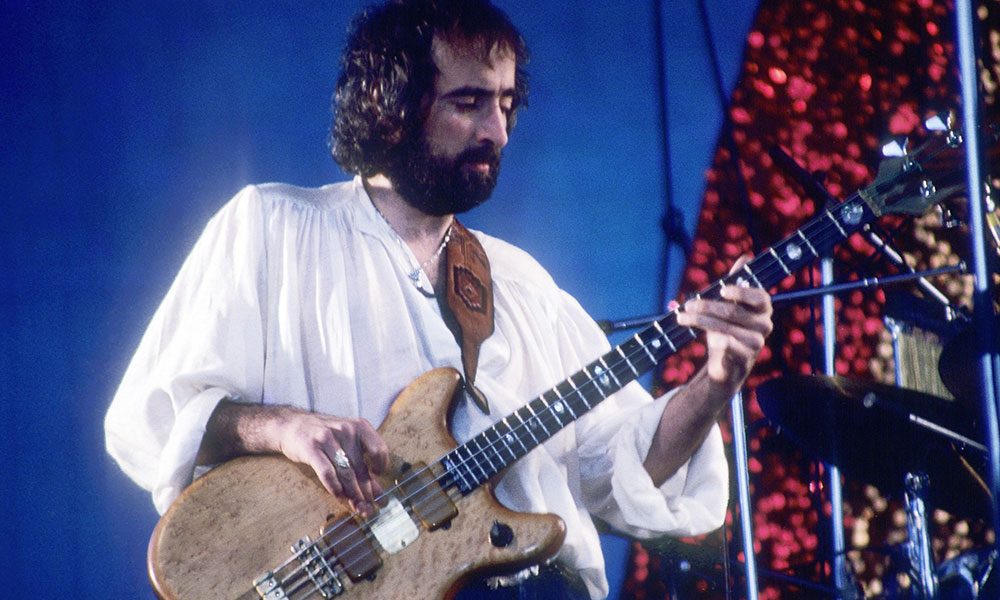
The year was 1977, and the air in the recording studio was so thick with tension it could have been sliced with a switchblade. Outside, the world was obsessed with the disco fever of Studio 54 and the glitter of the post-glam era, but inside the walls of the recording booth, Fleetwood Mac was imploding. It was a pressure cooker of fractured romances, heavy substance use, and deep-seated resentment. Yet, amidst this emotional wreckage, one man stood as the silent anchor. John McVie, with his bass guitar strapped low, played a rhythmic pulse that didn’t just support the melody; it kept the band from drifting into total oblivion.
John McVie was never the one for dramatic outbursts or tabloid headlines. While Lindsey Buckingham and Stevie Nicks were engaged in a volatile war of words that would define their legacy, and Christine McVie was navigating the painful dissolution of her marriage to the very man standing next to her, John McVie remained the steady, grounding force. His bass lines were the heartbeat of an album that was literally stitched together by hate and heartbreak. The irony of Rumours is that the songs detailing their most intimate betrayals were the same songs that required the deepest level of musical synchronization to perform.
If you listen closely to the tracks that defined that era, you can hear the discipline in his playing. Every note from John McVie was precise, deliberate, and remarkably calm. It was as if he knew that if he stopped playing—or if he played with anything less than total conviction—the entire machine would collapse. He provided the foundation for songs that spoke to millions, transforming the personal trauma of five people into the universal soundtrack of heartbreak. He was the sonic glue holding a shattered family together while they stood under the harsh lights of global fame.
This wasn’t just music; it was a survival strategy. In an era before the digital revolution, when a Walkman was the height of luxury and rock stars were treated like gods, John McVie understood that the only way to endure the scrutiny of the press and the internal exhaustion was to focus entirely on the craft. His contribution remains a masterclass in restraint. He didn’t need flashy solos or ego-driven riffs to command attention. He simply needed to be the pulse, the driving force that ensured the band survived to see another concert, another tour, and another chart-topping success.
Looking back, the legacy of John McVie goes far beyond his technical skill. He represents the unsung hero of the golden age of rock, the person who kept his composure while the world burned around him. Decades later, when those familiar bass lines hit the airwaves, they still possess the same raw, magnetic power they held in 1977. We don’t just listen to Fleetwood Mac because the songs are catchy; we listen because they are real. We listen because, through the steady, unwavering heartbeat of John McVie, we can still feel the echo of a band that dared to love, lose, and persist.