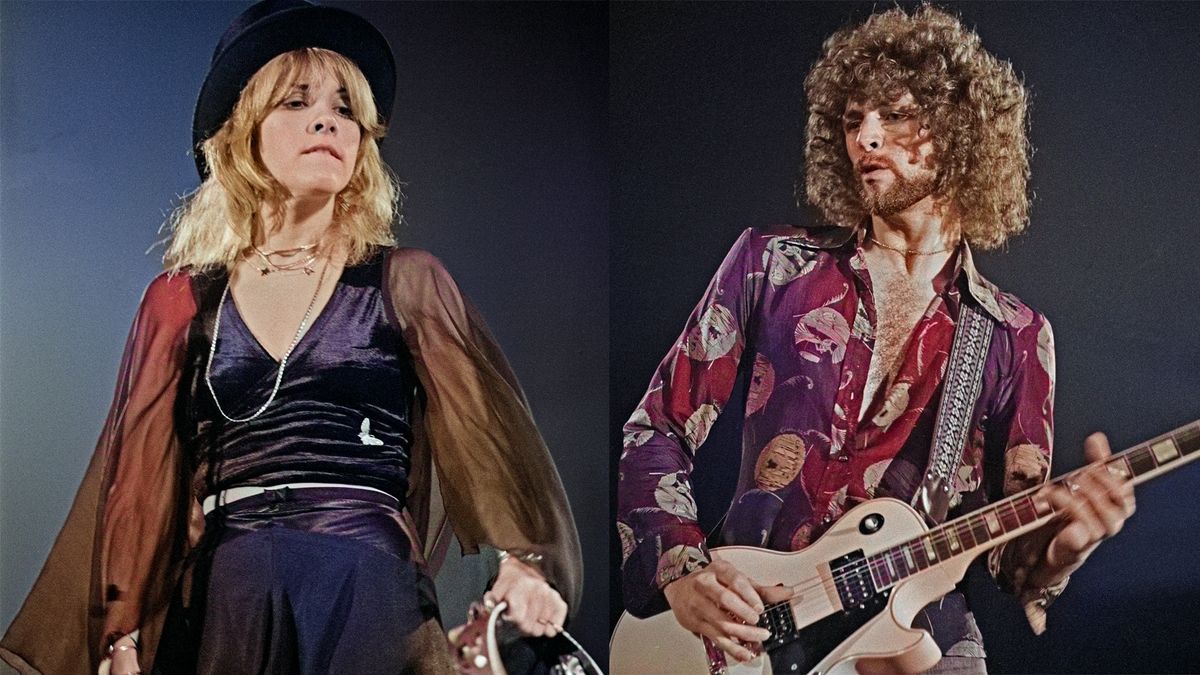
In 1977, while the world was busy spinning vinyl on their turntables and losing themselves in the velvet haze of the disco era, one of the greatest albums in history was being forged in the fires of a total emotional collapse. Fleetwood Mac’s Rumours is widely celebrated as a sonic masterpiece, but behind the polished production and soaring harmonies lies a brutal, intimate story of love turned to ash. For Stevie Nicks and Lindsey Buckingham, the recording process was not merely a professional obligation; it was a public autopsy of their own shattered romance, performed in front of their bandmates under the suffocating pressure of a ticking studio clock.
Stevie Nicks and Lindsey Buckingham had entered the band as a couple, their creative synergy fueled by a passionate, volatile bond. By the time they stepped into the Record Plant in Sausalito, that bond had effectively evaporated. The atmosphere within the studio walls was thick with tension, defined by a bitter silence that only broke when they were forced to trade insults through their lyrics. It is difficult to fathom the psychological toll of singing songs of heartbreak to the very person who broke your heart, just inches away behind the studio glass. Yet, this friction became the album’s lifeblood. Every guitar riff from Lindsey felt like a stinging retort, and every haunting vocal from Stevie acted as a raw, vulnerable confession of their shared wreckage.
The genius of the era was that it managed to turn personal tragedy into universal art. As the sound of the late seventies shifted, these two icons captured the specific loneliness of fame. They were trapped in a gilded cage of success, forced to maintain the image of a cohesive band while their personal lives remained in absolute shambles. The producer, Ken Caillat, often spoke of the bizarre environment where band members were either refusing to speak to one another or locked in heated arguments. There was no escape. They were prisoners of their own contract, and in that desperation, they channeled their fury into tracks like Go Your Own Way and Dreams, songs that resonate just as powerfully today as they did in the era of the Walkman.
What makes the story of Stevie Nicks and Lindsey Buckingham so enduring is its devastating authenticity. We often romanticize the music of the seventies, picturing Woodstock-era freedom and Studio 54 glamour, but the reality for these artists was often cold and isolating. The music became a weapon, a shield, and eventually, a legacy. They did not just write pop songs; they documented the disintegration of their souls. When you listen to the record today, you aren’t just hearing a masterpiece of production; you are eavesdropping on a conversation that two people could no longer have in real life.
Decades later, the tragedy of that relationship remains the anchor of the Fleetwood Mac legend. It serves as a reminder that the most profound art is often birthed in moments of profound pain. While their love affair didn’t survive the scrutiny of the spotlight, the music they created during their darkest chapter continues to define a generation. We look back at Stevie Nicks and Lindsey Buckingham not just as rock stars, but as storytellers who dared to bleed for their craft. Their saga remains the ultimate testament to the price of fame, proving that sometimes, in order to create something perfect, you have to be willing to tear everything else apart.