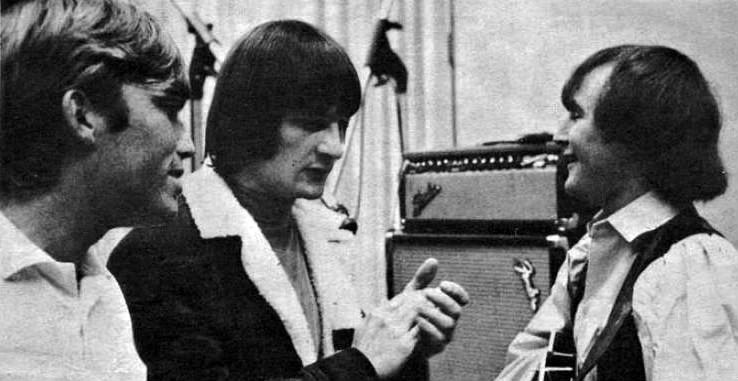
In the vibrant, sun-drenched landscape of late 1960s Los Angeles, the music industry was the beating heart of a cultural revolution. It was an era of Jukebox dreams, where labels like Columbia Records were churning out hits that would define a generation. At the center of this orbit stood Terry Melcher, a golden boy of the industry, a producer with the golden touch who had helped shape the sound of the Beach Boys and The Byrds. He was the gatekeeper of cool, living a life of privilege in a secluded mansion on Cielo Drive. But in 1968, a single, professional decision made by Terry Melcher would inadvertently pull the curtain back on the darkest, most terrifying chapter in American music history.
It began as a mundane business transaction. An aspiring, charismatic musician with a guitar and a messianic complex walked into Terry Melcher’s sphere, looking for the golden ticket to stardom. He wanted a record deal, a chance to be heard by the world. But Terry Melcher, ever the discerning ear, heard the demos and felt they lacked the commercial polish required for the mainstream charts. He politely declined. It was a rejection that happens thousands of times a day in the ruthless machinery of Hollywood, yet this particular ‘no’ would set in motion a sequence of events that would forever alter the psyche of a nation. The aspiring musician was Charles Manson, and the rejection ignited a smoldering, irrational rage within him.
For those who lived through the era, the transition from the peace and love idealism of the decade to the chilling reality of the Manson Family murders felt like a sudden, jarring rip in the fabric of society. Terry Melcher had moved out of his Cielo Drive residence, unaware that his former sanctuary was still perceived by his rejected guest as a symbol of the establishment that had shut him out. When the cult’s path of destruction eventually turned toward that specific address, the music world realized that the lines between the glitz of the recording studio and the shadows of the real world were thinner than anyone dared to admit.
The tragedy transformed the way we look back at the 1960s. It wasn’t just about the shift from psychedelic rock to the hard, grit-filled sounds that would follow; it was the loss of innocence. Terry Melcher carried the weight of that fateful connection for the rest of his life, a reminder that in the high-stakes world of fame, every action has an unforeseen consequence. The mansion that once hosted creative collaborations became an enduring monument to a nightmare that brought the curtain down on the decade’s naive optimism.
Today, we look back at the career of Terry Melcher not just for the chart-topping records he produced, but for the haunting intersection of his life with a dark, unfolding reality. It remains a stark reminder that even in the golden age of American music, the shadows were always lurking, ready to step into the light. The story of Terry Melcher invites us to ponder how thin the line truly is between being an architect of a dream and a target of a delusion, forever marking his place in the annals of music folklore.