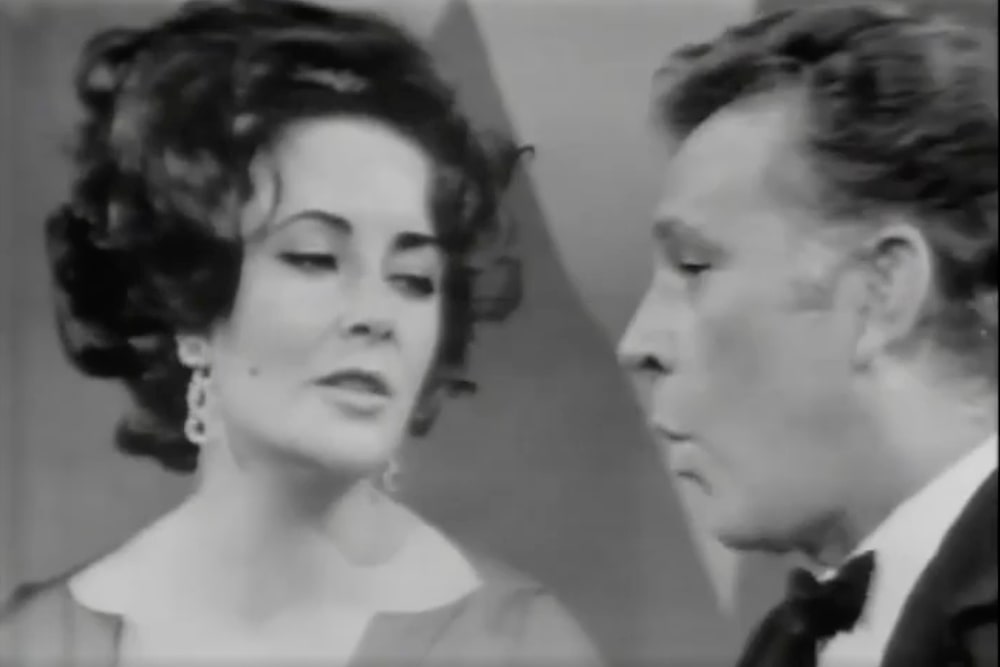
In 1963, the silver screen was not just reflecting reality; it was being consumed by a fire that threatened to burn down the very foundations of the studio system. While the world was dancing to the early rhythms of rock and roll and the burgeoning influence of the British Invasion, all eyes were fixated on a singular, gargantuan spectacle: the set of Cleopatra. It was here that Elizabeth Taylor and Richard Burton, two titans of the acting world, allowed their onscreen chemistry to bleed into a volatile, real-life affair that would redefine the meaning of celebrity scandal forever. This was not just a romance; it was a cultural earthquake that left the Vatican and the press in a state of utter, breathless shock.
Elizabeth Taylor was already the reigning queen of Hollywood, a woman whose violet eyes seemed to hold the secrets of every tragedy and triumph. Richard Burton, a fiery, Shakespearean-trained Welshman with a voice like gravel and honey, was her match in every sense of the word. When they met under the desert sun of the Cleopatra set, the atmosphere crackled with a forbidden intensity. They were both married to other people, yet their mutual magnetism was a gravitational force that no contract or societal expectation could possibly contain. It was a classic clash of egos, desires, and undeniable talent that turned a massive cinematic production into a tabloid centerpiece that dominated every jukebox conversation and diner gossip column of the era.
As the cameras stopped rolling, the drama only deepened. Their relationship became a cycle of opulent luxury and harrowing discord, played out in the glare of the flashbulbs. Elizabeth Taylor and Richard Burton lived their lives like they were performing in a grand, high-stakes stage play, complete with diamond jewelry that cost fortunes and public arguments that chilled the air. Behind the velvet curtains of their private suites, the reality was far more jagged. The weight of being the world’s most watched couple brought with it a reliance on the vices of the time, as they sought refuge from the suffocating pressure of their own fame. It was the dark side of the Golden Age, a time when the glamour of the studio era masked a deeper, more restless human fragility.
Decades later, the story of Elizabeth Taylor and Richard Burton still resonates because it captures the raw, unvarnished collision of beauty and chaos. They were the original power couple, representing a brand of stardom that felt larger than life yet painfully human. Their journey mirrors the rise and fall of the mid-century icons we idolize, serving as a reminder that even the brightest lights cast the longest shadows. Whether you recall the headlines from your childhood or have discovered their films through the lens of history, their legacy remains an essential chapter of 20th-century allure.
As the era of epic cinema eventually gave way to the neon lights of the seventies and the gritty sounds of the eighties, the story of this volatile romance remains frozen in time. It serves as a poignant testament to a love that was as destructive as it was legendary. Perhaps the true tragedy of Elizabeth Taylor and Richard Burton is not that they lost each other, but that they had to live their most intimate moments for an audience that never looked away. Their flame continues to flicker in the collective memory, inviting us to look back at a time when Hollywood truly felt like the center of the universe.