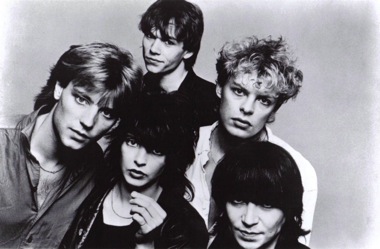
It was 1982, and the air in West Berlin was thick with the chilling tension of the Cold War. For most, the Rolling Stones concert at the Waldbühne was just another loud, electrifying night of rock and roll. But for Nena guitarist Carlo Karges, the atmosphere held something far more sinister. As he gazed up, watching a sea of balloons drift lazily across the horizon toward the impenetrable divide of the Berlin Wall, his mind didn’t see a party. He saw a fleet of unidentified flying objects. In that flicker of paranoia, a horrifying vision of a nuclear apocalypse ignited, eventually fueling the haunting synth-pop rhythm of 99 Luftballons.
The song, released in early 1983, became an unlikely global phenomenon. While the world danced to its infectious, upbeat synthesizers and the distinct, raspy vocals of the lead singer, Nena, the lyrics told a much darker story of bureaucratic incompetence and accidental total annihilation. It was the irony of the era: a song about the end of the world became a staple on radio stations and in dance halls from New York to Tokyo. The juxtaposition of the bubbly production and the grim reality of mutually assured destruction defined the spirit of the eighties—a decade characterized by neon lights, Walkmans, and the constant, unspoken fear of the red button.
Nena, the band, quickly became the face of the German New Wave movement. With their eccentric style and the magnetic stage presence of the lead singer who shared the group’s name, they captured the anxieties of a generation living in the shadow of the Iron Curtain. For those of us who grew up in that time, 99 Luftballons was more than just a catchy hit; it was a protest anthem wrapped in a pop veneer. It resonated because it felt real. When Nena sang about the ninety-nine years of war left in the wake of those balloons, it felt like a warning that any one of us could be a casualty of a geopolitical misunderstanding we had no control over.
Looking back, the success of the track is a testament to how art often thrives in the face of existential dread. The contrast between the simple, childlike imagery of floating balloons and the sophisticated, cold-blooded machinery of war captured a specific, chilling moment in history. It remains a fascinating relic of the Cold War, reminding us of a time when the world felt fragile, held together by frayed political treaties and the hope that a stray balloon wouldn’t trigger the end of days.
Today, the legacy of Nena remains tied to that one singular moment of terrifying inspiration. Whenever those iconic synth chords hit the airwaves, we are transported back to that divided Berlin, where a concert attendee saw the end of the world in the sky. It is a haunting, timeless masterpiece that proves even the most terrifying nightmares can become the greatest anthems of our lives. Next time you hear the song, listen closely to the lyrics; beneath the melody, the ghosts of the Cold War are still whispering.