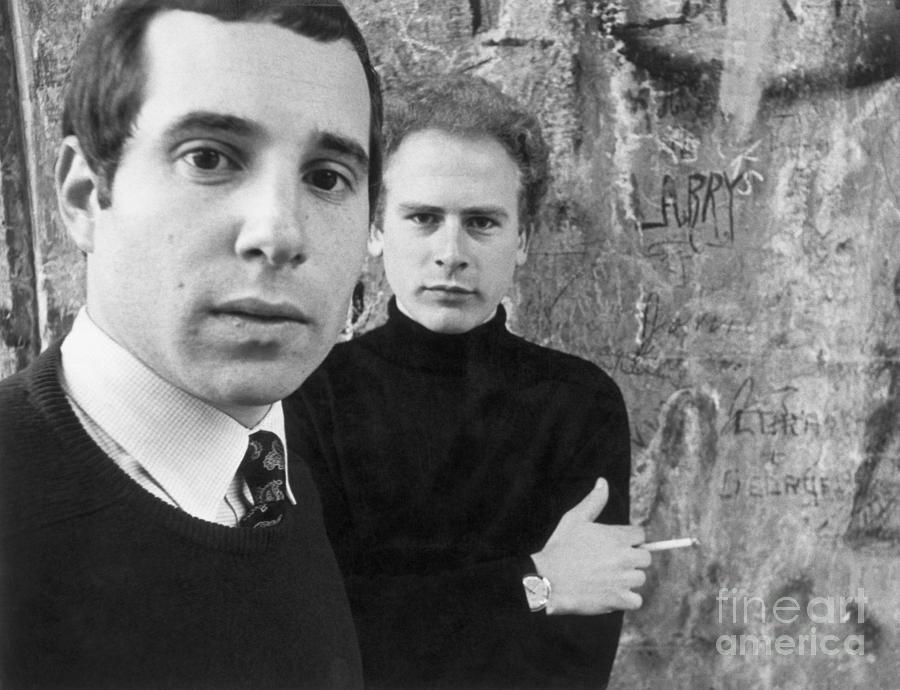
In the winter of 1964, a quiet folk duo named Simon and Garfunkel sat in a sterile recording studio, armed with nothing but two acoustic guitars and their hauntingly angelic harmonies. Their debut album had landed with a thud, leaving them discouraged and on the verge of splitting up. Little did they know, a clandestine operation was brewing in the shadows of the record label, one that would turn a failed folk ballad into an anthem that defined an entire generation. Paul Simon and Art Garfunkel were completely unaware that their artistic vision was about to be hijacked by a secret, unauthorized experiment.
The song in question was The Sound of Silence. In its original iteration, it was a delicate, stripped-back poem set to acoustic strings, reflecting the introspective, lonely soul of mid-sixties Greenwich Village. But the producers at Columbia Records were not satisfied with folk obscurity. Without asking for permission, they brought in a team of electric session musicians to overdub drums, bass, and electric guitars onto the original masters. They effectively reinvented the track in secret, transforming a gentle folk song into the birth of folk-rock. When Paul Simon and Art Garfunkel finally heard the result, they were reportedly horrified by what they perceived as a shallow, commercial betrayal of their acoustic integrity.
Yet, the world had a different reaction. When the electric version hit the radio waves, it became an overnight sensation, climbing the charts and tapping into a cultural zeitgeist that was shifting rapidly away from the polished pop of the early fifties toward the grit and angst of the coming era. The irony is as thick as the tension that eventually fractured the duo. That unauthorized change, which felt like a slap in the face to the perfectionist Paul Simon, cemented their status as icons of the decade. The song became a bridge between the quiet melancholy of the early sixties and the thunderous, electric rebellion that would soon define rock and roll.
Looking back, this moment remains one of the most intriguing turning points in music history. It speaks to the eternal conflict between the artist and the industry, the tension between raw emotion and commercial polish. Simon and Garfunkel had captured the sound of suburban alienation perfectly, but it took an act of creative sabotage to ensure the world would actually listen. It serves as a reminder that behind every legendary track, there is often a messy, human drama, a clash of egos, and a lucky accident that changes everything.
Decades later, the haunting resonance of that electric-acoustic blend continues to capture the imagination of anyone who owns a record player or feels the pull of the past. It is a piece of history that echoes the anxieties of a changing America, a time when jukeboxes were the heartbeat of every diner and the airwaves were the only map to cultural evolution. Whether you view that studio intervention as a genius masterstroke or a painful intrusion, it remains an essential chapter in the story of two voices that defined our collective memory. Next time you hear the opening notes, listen closely for the echoes of the argument that changed the sound of a decade forever.