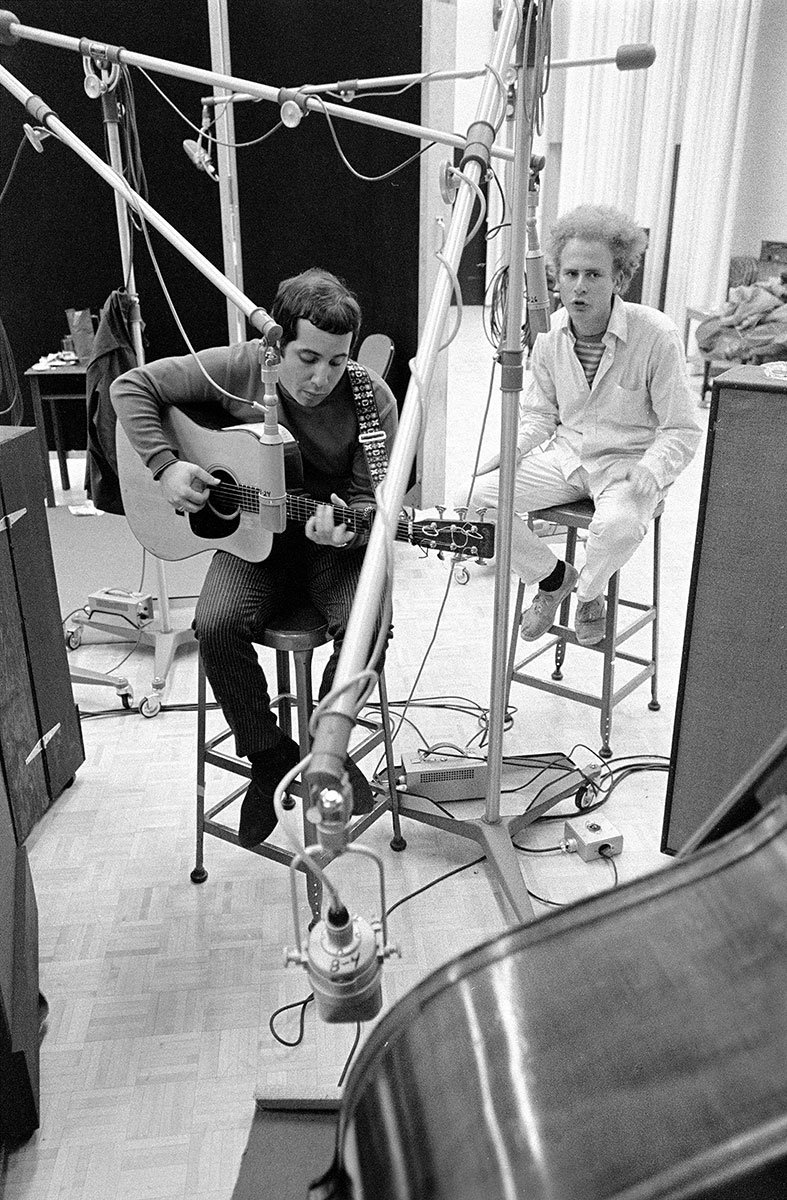
It was 1969, a year that felt like the world was spinning on its axis, caught between the tail end of the hippie dream and the harsh realities of a changing decade. Inside the sterile walls of a New York recording studio, Paul Simon and Art Garfunkel were chasing a sound that existed only in their restless imaginations. They were crafting the masterpiece that would become The Boxer, a song of isolation and weary resilience. Yet, while the lyrics spoke of a fighter struggling against the weight of the city, the true soul of the track was born from a bizarre accident of acoustics that almost never happened.
To capture the massive, thunderous percussion that defines the song, the engineers needed more than just a standard studio booth. They wanted a sound that felt like a cannon shot echoing through an empty cathedral of concrete and steel. They found their answer in a drafty, industrial elevator shaft in the heart of Manhattan. As the snare drum was struck, the sound traveled down the shaft, bouncing off the hard surfaces to create that distinct, metallic, and hauntingly cavernous ring. It was a crude, brilliant piece of engineering that turned a simple folk recording into an atmospheric sonic experience.
For Simon and Garfunkel, this obsession with perfection was both their greatest strength and the hidden fault line that would eventually fracture their relationship. The late sixties were a time of intense artistic pressure, and their creative partnership was already beginning to feel the strain of their divergent visions. They were the voices of a generation, yet they were increasingly two strangers walking down different paths. The Boxer stood as a testament to that period, blending the intimacy of their acoustic roots with the ambitious, polished production styles that were beginning to dominate the charts.
Even decades later, hearing those drum strikes immediately transports listeners back to a world of analog tapes, spinning turntables, and the crackle of a Walkman. It is a reminder of an era when music production was an experimental craft, often requiring physical ingenuity and a bit of luck to achieve the perfect resonance. The song did not just capture a melody; it captured the exact feeling of standing alone on a subway platform at midnight, waiting for a future that seemed both promising and terrifying.
Today, the legacy of Simon and Garfunkel remains etched into the bedrock of American music, as timeless as the city streets they sang about. Their music continues to resonate with those who remember the smell of fresh vinyl and those who discover the depth of these classics for the first time. The Boxer serves as a haunting echo of a bygone era, proving that sometimes, the most enduring art is born when we step outside the box and let the architecture itself provide the rhythm. Close your eyes, listen to those drums, and let the ghost of 1969 carry you away.