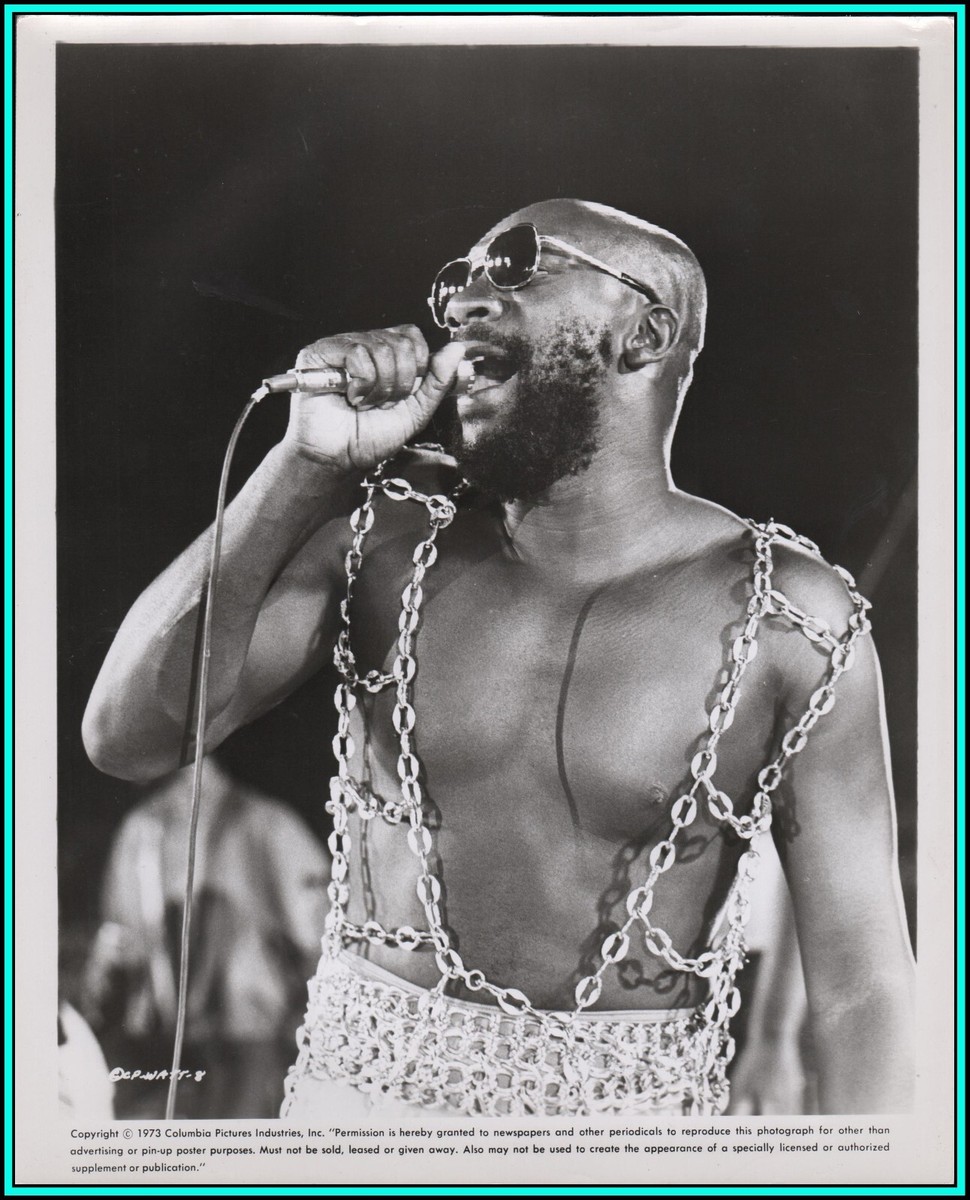
It was 1969, and the air inside the legendary Stax Records offices in Memphis felt heavy with the scent of impending doom. The label, once a titan of soul music that stood toe-to-toe with Motown, had just lost its entire master tape catalog due to a disastrous business deal. The coffers were dry, the artists were demoralized, and the Jukeboxes across America were playing the hits of others. The empire was sinking, and the industry was already writing its obituary. Then, a towering figure stepped into the studio, wearing a vision of gold chains and sunglasses that felt like a bridge between the grit of the streets and the glamour of the future. That man was Isaac Hayes, and he held the keys to a resurrection that would change soul music forever.
Isaac Hayes was not just an artist; he was an auteur of atmosphere. Desperate to keep the lights on, the label gave him one last shot. There was no room for negotiation and no budget for an orchestra. Isaac Hayes demanded total creative control, a gamble that most executives at the time would have laughed at. He walked into the booth with nothing but his soul, his keyboard, and a vision of a sound that was darker, longer, and more cinematic than anything the radio had ever dared to play. He wasn’t interested in three-minute pop singles. He wanted to build sonic cathedrals.
The resulting masterpiece, Hot Buttered Soul, contained only four tracks. It was a revolutionary deviation from the fast-paced, high-energy tracks that dominated the late sixties. When the needle dropped on the record, listeners weren’t met with a dance-floor anthem, but a slow-burning, orchestral odyssey. Isaac Hayes treated the studio like a film set, layering lush strings over deep, hypnotic grooves. It was haunting, vulnerable, and profoundly sophisticated. This record didn’t just top the charts; it redefined the limits of what a soul album could be, proving that artistic integrity was the only thing standing between the label and total oblivion.
The success of those four tracks acted as a lifeline, pumping enough oxygen back into Stax Records to keep the dream alive for another decade. Isaac Hayes became the face of a new era, turning his bald head, gold chains, and velvet-deep voice into an iconic cultural brand. He walked the streets of Memphis like a king who had rebuilt his castle from the rubble. The dramatic turnaround was a testament to the raw power of individual genius when pushed to the absolute edge of failure.
Today, we look back at the work of Isaac Hayes as a quintessential pillar of American music history. His ability to blend the raw grit of southern soul with a lush, symphonic complexity paved the way for the smooth grooves of the seventies and the samples of future generations. He taught us that when the world tells you there is nothing left to lose, you have finally earned the freedom to create something truly eternal. Next time you hear the smooth, sweeping strings of a classic soul track, remember that it all started with one man and four songs that saved a kingdom.