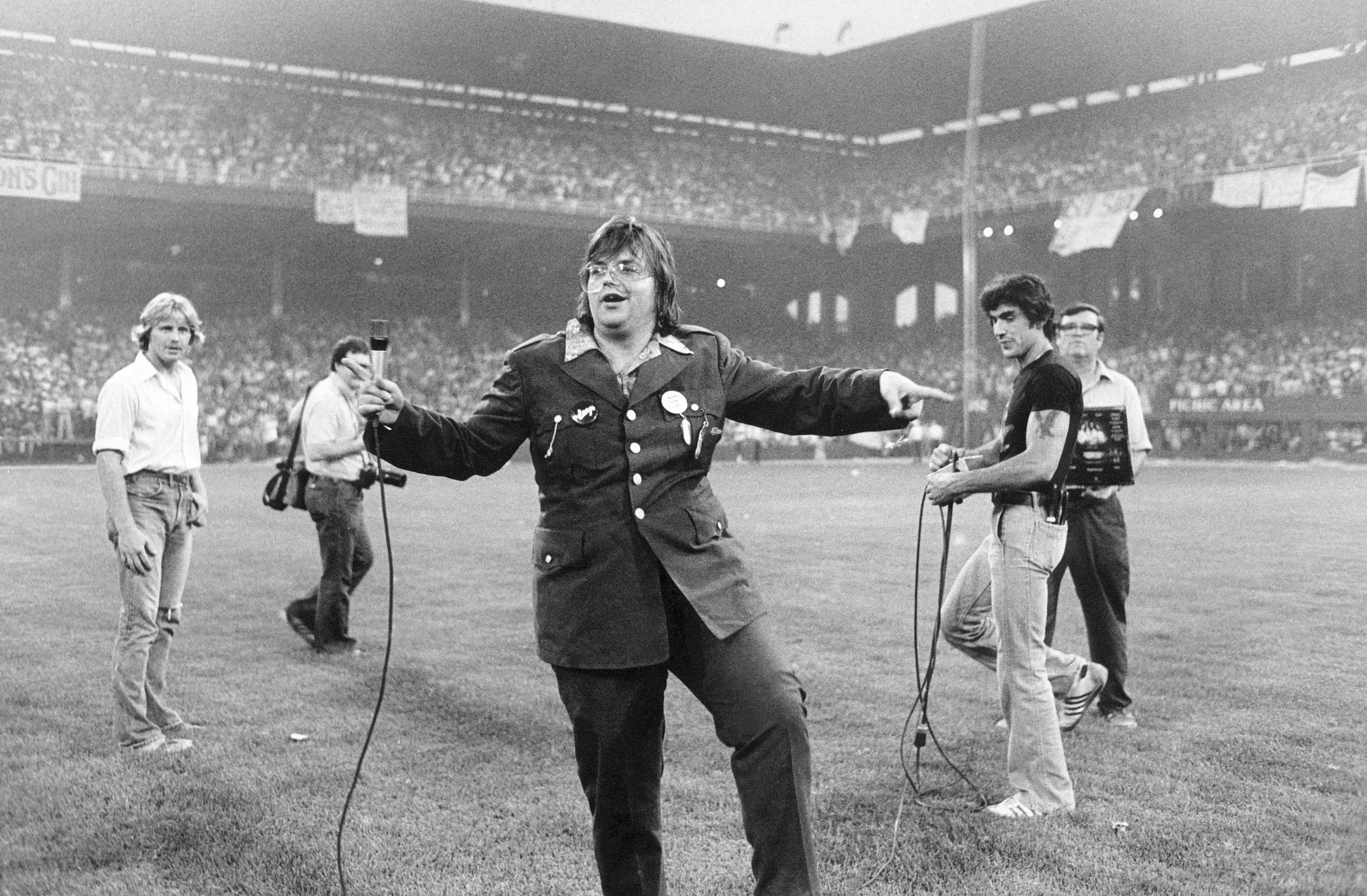
Most of us remember the late seventies as a time of mirror balls, silk shirts, and the undeniable magic of the Bee Gees. Their harmonies were the soundtrack to our youth, gracing wedding dances and quiet family dinners alike. But there was one humid night in Chicago that changed the course of music history forever, turning a beloved cultural phenomenon into a target for pure, unadulterated rage. If you were around in 1979, you might recall the unsettling headlines about the Disco Demolition Night at Comiskey Park, an event that remains one of the most shocking moments in the history of American pop culture.
It was intended to be a simple baseball promotion, but it quickly devolved into a terrifying scene of chaos. Thousands of vinyl records were piled into a large bin in the outfield, waiting to be blown up by explosives between games. As the debris flew into the air, the crowd surged onto the field, fueled by an anti-disco fervor that felt sudden and aggressive. While the Bee Gees were nowhere near the stadium that night, the explosion effectively ended their reign at the top of the charts. The riot became a symbol for a deeper cultural divide, and suddenly, being a fan of the Bee Gees was no longer cool; it was treated as a social liability.
Looking back, the backlash against the Bee Gees feels incredibly unfair. Barry, Robin, and Maurice Gibb were masters of songwriting who brought joy to millions. They didn’t just define the disco era; they wrote some of the most enduring ballads of our generation. Yet, after that infamous night at Comiskey Park, radio stations stopped playing their records and record stores hid their albums in the back bins. It was a cultural exile that stripped three incredibly talented brothers of their rightful place in the spotlight, all because of an angry mob that had lost its perspective.
Why does this story still resonate so deeply today? Perhaps it is because we have all felt the sting of a sudden, unreasonable shift in public opinion. We remember a time when families could sit around a dinner table enjoying the same music without judgment. The Bee Gees were the face of our communal experience, and seeing them scapegoated for a cultural trend they simply happened to lead remains a bittersweet memory for those of us who grew up with their records on our turntables.
Today, we look back at the Bee Gees with a renewed appreciation for their genius and their resilience. The Bee Gees survived that dark chapter because true artistry never really goes out of style. While the smoke has long cleared from that stadium floor, the legacy of the Bee Gees continues to shine, proving that great music eventually outlasts the chaos. Maybe it is time we pull those old records out of the closet and remember the brothers for the joy they truly gave us.