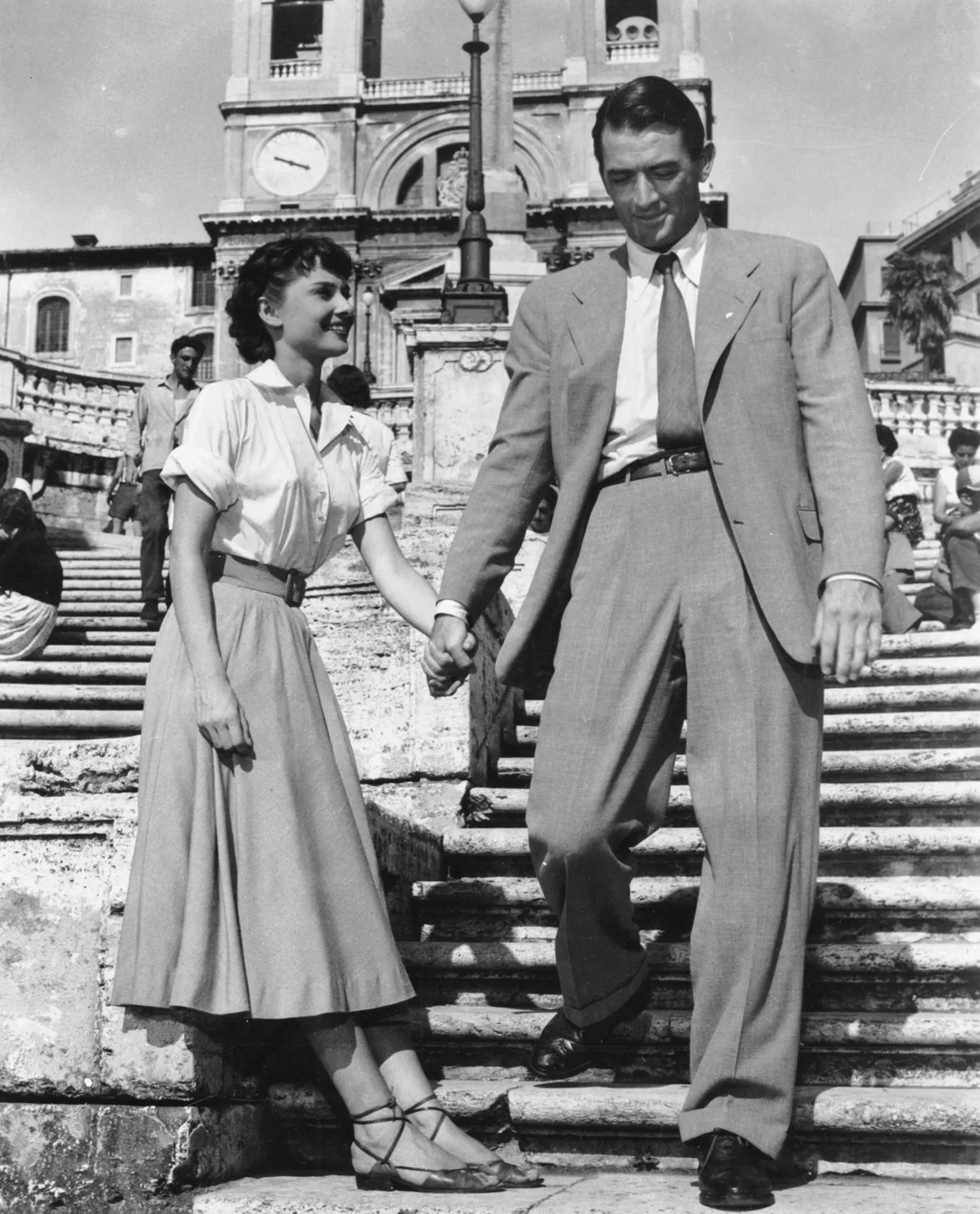
In the golden tapestry of Hollywood history, there are moments of cinematic brilliance that shine brighter than the rest. As we look back from the vantage point of 2026, it is easy to forget that the icons we revere were once simply hopeful dreamers stepping onto a film set for the very first time. Among these historic milestones, none carries quite as much charm or gentle nobility as the 1953 masterpiece Roman Holiday. It was a film that did not merely capture the beauty of the Italian capital; it captured the emergence of a legend, thanks in no small part to the quiet, selfless grace of one of cinema’s true gentlemen, Gregory Peck.
When production began on Roman Holiday, Gregory Peck was already a towering presence in American cinema. He was a bona fide star, a household name whose commitment to the craft of acting had earned him respect across the industry. Yet, when he encountered his co-star, a young and virtually unknown British-Dutch actress named Audrey Hepburn, he immediately recognized a spark that the world had yet to witness. He saw a rare, ethereal quality in her performance that transcended mere acting—it was a genuine, luminous presence that commanded the screen.
In an act of professional generosity that remains legendary in the annals of Hollywood, Gregory Peck insisted that Audrey Hepburn share his above-the-title billing. At the time, this was a significant decision; an established star of his caliber could have easily relegated a newcomer to a secondary credit. However, Gregory Peck knew that Hollywood was witnessing something truly special. He understood that the story of a princess seeking a fleeting escape in the Eternal City needed to feel authentic, and he allowed Audrey Hepburn the space to shine as his equal.
This partnership defined the heart of Roman Holiday. Audrey Hepburn delivered a performance that was equal parts vulnerable and sophisticated, earning her an Academy Award and securing her place as one of the most beloved figures in history. Her chemistry with Gregory Peck was not forced; it was built on mutual respect and a shared dedication to the narrative. They brought to life a story of brief, poignant romance that mirrored the magic of the 1950s—an era defined by elegance, classic storytelling, and a sense of wonder that still resonates deeply with us today.
As we reflect on the decades that followed, from the rebellious method acting of the sixties to the gritty realism of the eighties and the global star power of the nineties, the story of Roman Holiday stands as a reminder of what film can be at its best. It reminds us that behind every great motion picture is a human story of collaboration and kindness. Audrey Hepburn and Gregory Peck gave us a timeless gift that winter of 1953, and all these years later, the light of their friendship still flickers across our screens, inviting us to remember a more elegant time.