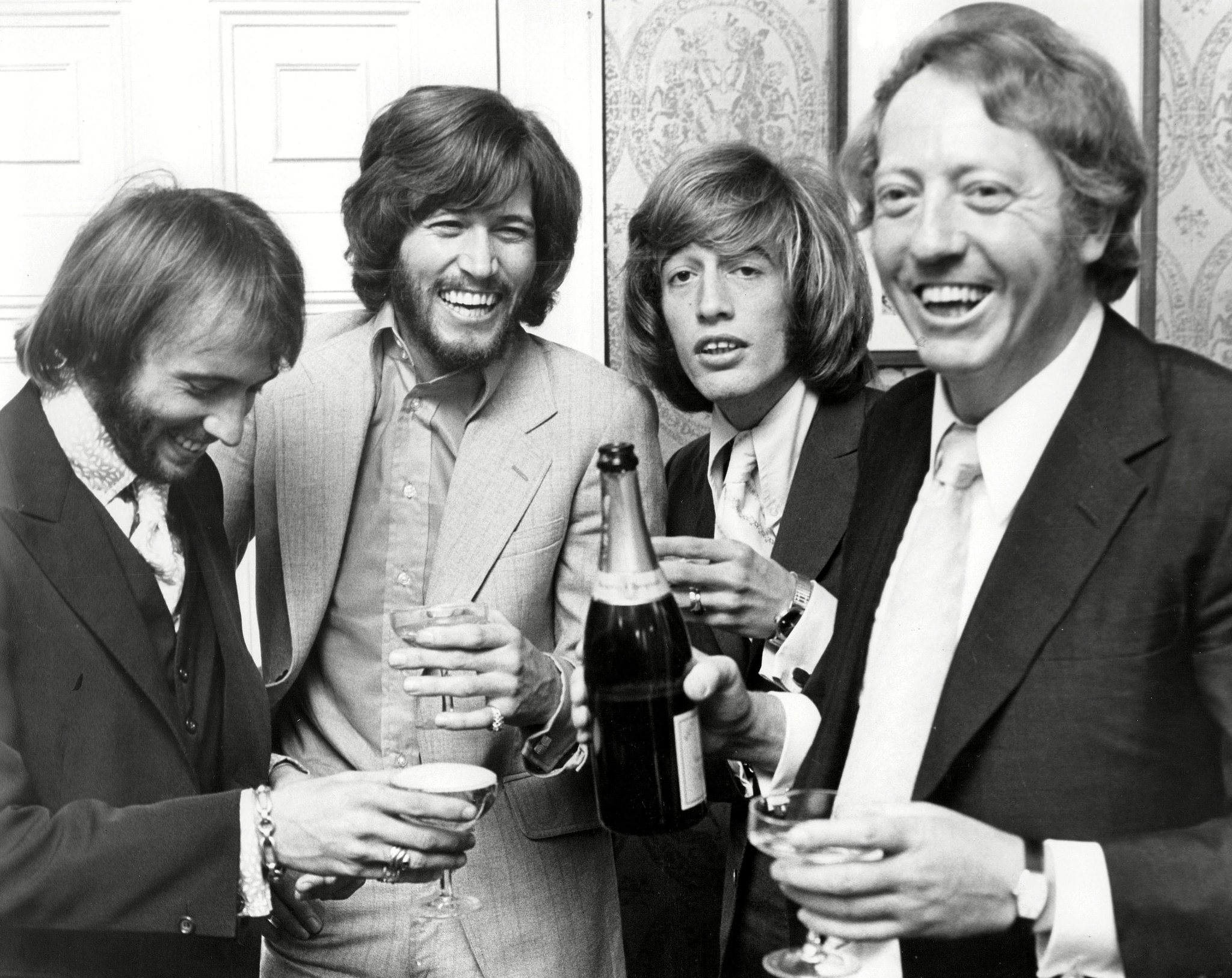
The late seventies were a golden era for music, a time when the world was gripped by the shimmering pulse of disco and the haunting, melodic harmonies of the Bee Gees. We all remember sitting in our living rooms, watching the television as Barry, Robin, and Maurice Gibb defined an entire generation. Their soundtrack for Saturday Night Fever was the heartbeat of our youth, a cultural phenomenon that turned three brothers into global icons. Yet, behind the glitter, the sequins, and the record-breaking sales, a dark cloud was gathering that would permanently alter their lives and change their trust in the music industry forever.
At the center of their professional universe stood Robert Stigwood, the legendary manager and mastermind who had guided the brothers toward their meteoric rise. For years, Robert Stigwood was more than a businessman; he was considered a part of the family, a trusted architect of their legacy. We looked at him as the man who saw the potential in the Gibb brothers when few others did. However, in 1980, the harmony that had propelled them to the top of the charts came to a jarring, silent halt. The brothers made the shocking decision to sue Robert Stigwood, alleging that millions of dollars in royalties from the Saturday Night Fever era had been withheld from them.
It was a betrayal that felt deeply personal, even to those of us watching from the outside. For a generation that valued loyalty and the sanctity of the family unit, the legal battle felt like a cold shower. How could the man who stood by their side during their climb to superstardom be the same person accused of such a massive deception? This was not just a squabble over checks and balances; it was the shattering of an inner circle that had navigated the treacherous waters of fame together. The brothers felt cheated not just out of their earnings, but out of the professional intimacy they had cultivated for over a decade.
The litigation revealed the messy, complicated intersection of friendship and business. Robert Stigwood had been the gatekeeper, controlling the rights and the revenue that the Bee Gees had worked so hard to produce. When the lawsuit hit the headlines, it left fans questioning everything they thought they knew about the music business. It highlighted the fragility of the relationship between artists and their management, reminding us that even the most successful, tight-knit family teams are vulnerable to the pressures of greed and legal ambiguity.
Looking back today, the story of the Bee Gees and Robert Stigwood serves as a poignant reminder of the cost of fame. While their music remains a timeless treasure that transports us back to the best days of our lives, the shadow of that legal fight remains a part of their complex history. It was a moment of disillusionment that marked the end of an era. Even decades later, the narrative of that betrayal resonates with us because it touches on universal themes of trust, family dynamics, and the pursuit of justice when you feel wronged by those you once called kin. We still spin our favorite records, but we now know the price of the magic we enjoyed.