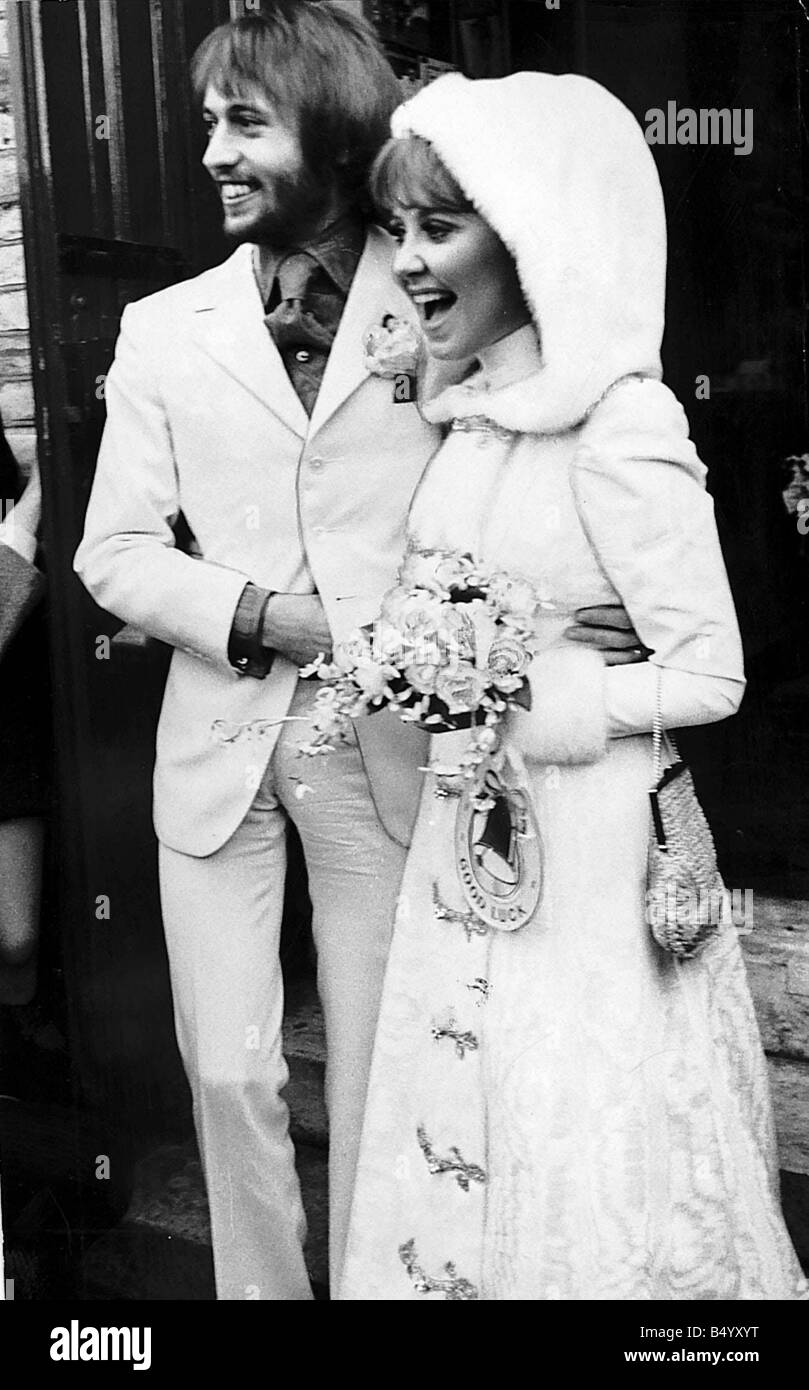
It was the event that defined the tail end of the Swinging Sixties. In February 1969, the music world held its breath as Maurice Gibb, one of the brilliant brothers behind the Bee Gees, married the sensational Scottish pop star Lulu. To the public, it was the ultimate pop-music crossover. It felt as though a fairytale had materialized before our eyes, blending the harmonizing genius of British-Australian rock royalty with the powerhouse vocals of a beloved television darling. Millions of fans watched from afar, convinced that this young, talented power couple would rule the charts and remain together forever. Yet, the glitz and glamour of that wedding day masked a crumbling foundation that few fans were allowed to witness.
Behind the flashing cameras and the adoration of the press, the reality of life for Maurice Gibb and Lulu was far more somber. Marriage for two young stars in their early twenties at the height of their fame proved to be a crushing weight. They were constantly pulled in opposite directions by demanding tour schedules, record label expectations, and the relentless nature of the media spotlight. While they were building empires, they were losing the privacy required to build a life. The isolation that fame brought into their home created a wedge that widened with every passing year, turning their union into a cold, lonely existence that stood in stark contrast to their public image.
What truly destroyed their marriage was not a lack of affection, but the suffocating pressure of being public property. Maurice Gibb was navigating the internal tensions of the Bee Gees, while Lulu was managing her own meteoric rise. They were two ships passing in the night, anchored by a legal contract but adrift in a sea of professional obligations. There were no social media outlets to document their struggles or share their vulnerabilities back then; instead, they had to internalize the pain of a failing relationship while the world insisted on treating them as an untouchable celebrity fixture. By the time they officially parted ways in 1973, it felt like the end of an era for those of us who grew up rooting for their success.
Reflecting on this today, it serves as a sobering reminder of the true cost of fame during that golden age of music. We often look back at the late sixties with rose-tinted glasses, remembering the catchy melodies and the iconic fashion, but we rarely see the human cost hidden behind the headlines. The story of Maurice Gibb and Lulu is a poignant chapter in pop history that highlights how even the most celebrated romances can be eroded by the demands of a high-profile life. It was a union that flickered bright, only to fade away under the weight of an industry that never stops to catch its breath.
Even after all these decades, their story remains a captivating mystery that reminds us to appreciate the quiet, private moments we share with our own families. While the world remembers the hit songs and the grand wedding, those of us who remember the era know that the truth is rarely as perfect as a photograph. Perhaps there is comfort in knowing that even our brightest icons were just as human and fallible as the rest of us. It is a story of lost time, missed opportunities, and the brutal reality of love in the spotlight.