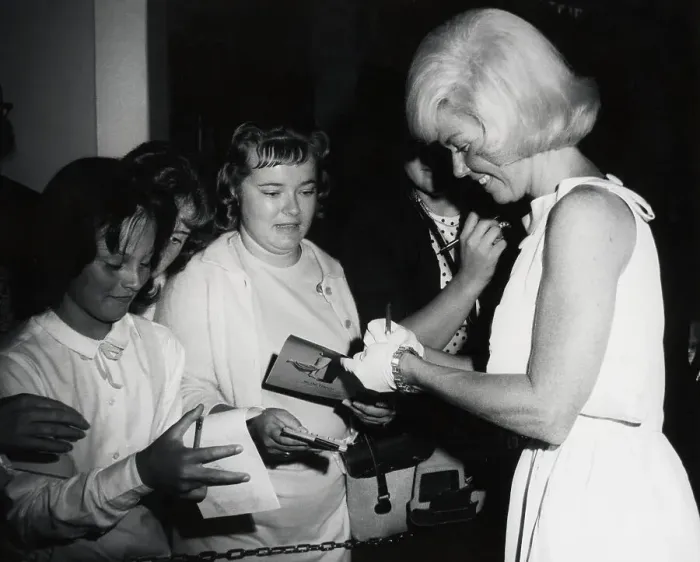
The year was 1956, and the world of American music was undergoing a tectonic shift. While the raw, electric energy of early Rock ‘n’ Roll was beginning to rattle the speakers of every local jukebox, one of Hollywood’s most beloved stars, Doris Day, found herself locked in a recording studio. She was asked to lend her voice to a track titled Que Sera, Sera (Whatever Will Be, Will Be). To Doris Day, the song felt like a slight against her artistry. She famously dismissed it as a childish nursery rhyme, a simple melody that lacked the sophistication she sought to portray as a serious singer and actress. She begged her producers not to force her to record it, fearing it would stain her reputation as a formidable talent in an era dominated by glamour and evolving pop sensibilities.
Yet, the music industry has a cruel and unpredictable way of turning doubt into destiny. Despite her reservations, Doris Day eventually stepped up to the microphone, delivering a performance that was stripped of artifice and heavy with vulnerability. When the track was released, it didn’t just climb the charts; it became an anthem for a generation navigating the uncertainty of the post-war American dream. The song’s hauntingly simple refrain hit a nerve that resonated across millions of homes, from the polished suburbs to the bustling city centers. It captured a philosophy of fatalism that felt comforting in a world defined by the looming tensions of the Cold War and the rapid pace of cultural change.
Looking back at the 1950s, it is easy to forget how much pressure icons like Doris Day were under. The era was defined by the transition from the golden age of cinema to the explosion of the television age, symbolized by the flickering glow of the cathode-ray tube. Doris Day was a master of this pivot, balancing her sparkling image with a hidden, fragile depth that often went overlooked by the media of the time. Her disdain for the song reflects the internal conflict of an artist caught between the nostalgia of the past and the demands of a new, louder musical landscape.
The irony of her legacy is that while she fought to be remembered for her dramatic acting and jazz-inflected vocals, it is this very nursery rhyme that cemented her immortality. Decades later, the song remains a staple of American culture, invoked in films, commercials, and memories of simpler times. It serves as a reminder that the most enduring art often arrives without fanfare, forced upon us by circumstance only to find a permanent home in our collective consciousness.
Today, when we hear those first iconic piano chords, we are transported back to a time of diners and transistor radios. Doris Day may have loathed the song in the moment, but she inadvertently gifted the world a timeless piece of comfort. It is a testament to the power of a voice that could make even a simple tune sound like a universal truth. As we look back on her remarkable life, we realize that she didn’t just record a hit; she defined a mindset. Whatever will be, will be, and for Doris Day, that turned out to be a legacy that refuses to fade away.