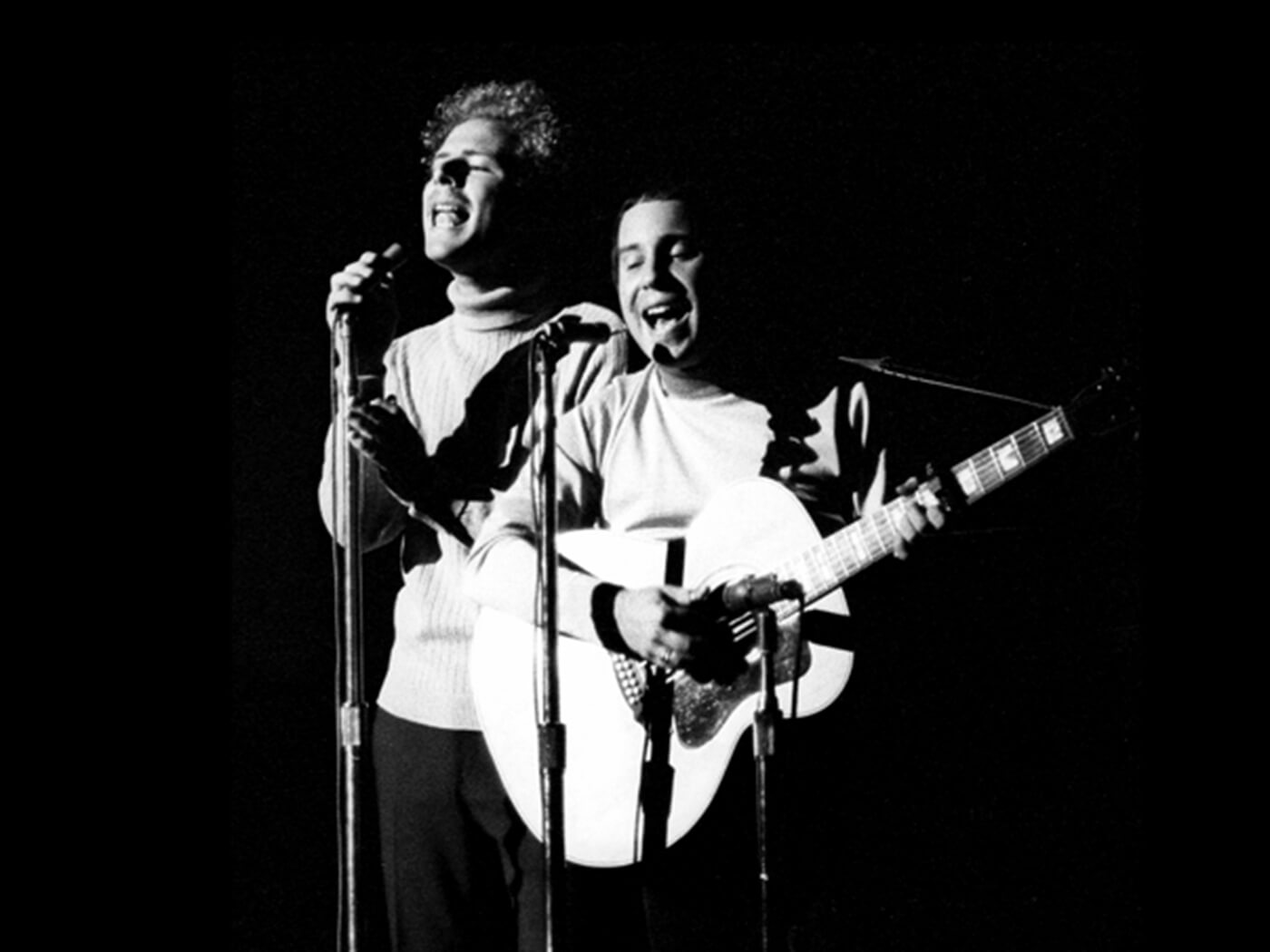
In the cold winter of 1964, two young men from Queens stood at a crossroads of despair. Paul Simon and Art Garfunkel had just released their debut folk album, Wednesday Morning, 3 A.M., and it sank like a stone. The record shops were empty, the critics were silent, and the duo—convinced their dream of musical stardom was officially dead—quietly parted ways. Paul headed for the gritty streets of London to busk for pennies, while Art returned to his university studies. It felt like the definitive end of an era before it had even truly begun, a quiet tragedy lost in the pre-Beatlemania noise of the American folk revival.
Yet, fate has a strange way of working behind the scenes. Unbeknownst to the duo, the lead track from their failed record, The Sound of Silence, had begun to stir in the shadows of the radio airwaves. Disc jockeys in the Northeast started receiving inexplicable requests for the song. Sensing an electric pulse, producer Tom Wilson made a clandestine decision that would change the trajectory of music history. Without consulting Paul Simon or Art Garfunkel, he took the original, acoustic folk recording and secretly added an overdub of electric guitars, bass, and drums, injecting it with the raw, nervous energy of the burgeoning folk-rock movement.
When the remixed single hit the charts, it didn’t just climb; it exploded. The haunting harmony, now layered over a driving, modern beat, captured the restless anxiety of a generation waking up to the mid-60s. By the time Paul Simon heard his own song on a car radio, he was stunned. The track had reached the number one spot on the Billboard Hot 100, effectively pulling him back from his self-imposed exile in England. The accidental alchemy of that secret remix transformed Simon and Garfunkel into global icons overnight, turning a forgotten failure into the quintessential anthem of urban alienation.
This dramatic reversal of fortune serves as a testament to the fragile nature of fame and the chaotic beauty of artistic evolution. The Sound of Silence became more than just a song; it became a cultural touchstone, echoing through the halls of history long before the arrival of the Walkman or the peak of the MTV generation. It was a bridge between the introspective, acoustic purity of the early 60s and the turbulent, amplified sounds that were soon to follow. The song’s success proved that sometimes, a masterpiece requires a little bit of chaos, a touch of mystery, and perhaps a producer who sees potential where the artists themselves see only defeat.
Decades later, the story of Simon and Garfunkel remains one of the most compelling narratives in music. It reminds us that behind every polished hit we hear on the radio, there is often a hidden struggle, a bitter breakup, or a gamble taken in the dark. Their journey serves as a nostalgic beacon for all of us, proving that even when the curtains seem to close for good, the music has a way of finding its own rhythm back to our hearts.