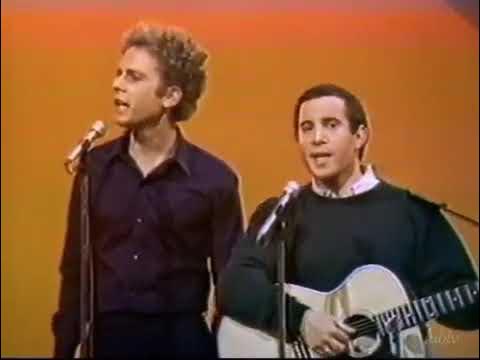
In the early months of 1964, while the world was still mourning the loss of a president and teetering on the edge of the British Invasion, a young Paul Simon was searching for something deeper. He found his sanctuary in the most unlikely of places: his parents’ pitch-black bathroom in Queens. Seeking total isolation from the noise of the outside world, he would sit in the darkness, letting the natural acoustics of the tiled room amplify his thoughts. It was here, in the cold, hollow silence of that room, that he penned the opening lines to a song that would eventually define a generation: The Sound of Silence.
At twenty-one, Paul Simon was far from the icon he would become. Alongside his childhood friend Art Garfunkel, he had already tasted the bitter sting of failure after their initial folk efforts stalled. Yet, something about those sessions in the dark shifted his songwriting trajectory. He wasn’t just looking for a catchy melody to play on a jukebox; he was trying to capture the fractured human condition. When he brought the finished lyrics to Art Garfunkel, the duo realized they had tapped into a profound, existential unease that was simmering beneath the surface of mid-sixties America.
The song was initially released as a gentle acoustic track, but it failed to make a dent in the charts. The duo briefly parted ways, with Simon heading to London to pursue a solo career. However, fate had other plans. Unbeknownst to them, their producer took the original recording, stripped it down, and overdubbed it with electric guitars and drums. Released in 1965, this folk-rock metamorphosis hit the airwaves just as the counterculture movement was beginning to bloom. It resonated with a generation feeling alienated by the rapid changes of the era, and suddenly, Simon and Garfunkel were catapulted into the stratosphere of fame.
The irony was not lost on the duo. The Sound of Silence was a song about the inability of people to communicate, yet its soaring success relied on the very mass-market machinery it critiqued. As they moved from the intimacy of small coffee houses to the grand stages of the late sixties, the tension between Paul Simon’s introverted intellect and Art Garfunkel’s ethereal, soaring vocals became the hallmark of their chemistry. Their music became a permanent fixture on radios and Walkman cassettes for decades, a sonic bridge between the folk traditions of the past and the rock-infused anxieties of the future.
Decades later, the haunting melody still feels incredibly relevant. It serves as a reminder that the most powerful art often comes from the darkest, quietest corners of our lives. Whether you first heard it on a grainy transistor radio or discovered it through modern cinema, the legacy of Simon and Garfunkel remains etched into the bedrock of American history. The next time you find yourself surrounded by the overwhelming noise of the modern world, remember that young man in the bathroom, and listen closely to what the silence has to say.