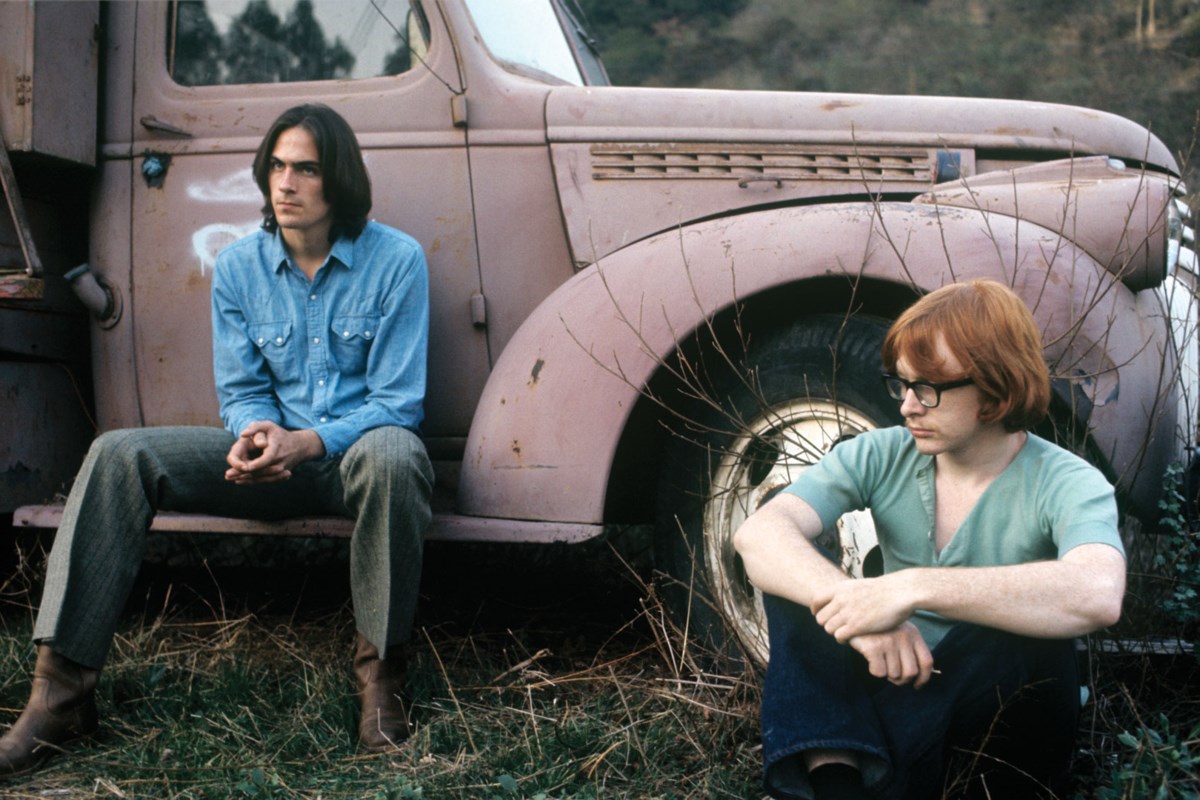
The year was 1968, and the music industry was a volatile beast of greed and ego. Deep in the heart of London, Peter Asher, formerly one half of the chart-topping duo Peter and Gordon, was ready to walk away from his own microphone to become an A&R executive for the Beatles’ newly formed Apple Records. Most of his peers were looking for the next big pop spectacle, but Asher heard something else—a haunting, fragile melody coming from a troubled, unknown American songwriter named James Taylor. It was a gamble that defied the logic of the swinging sixties, a moment where a crumbling reputation was staked on a man who had seemingly lost his way.
James Taylor arrived in London as a ghost of his own potential. Haunted by addiction and the crushing pressure of a failed recording contract, he was a man drifting through the haze of a pre-Walkman era, carrying little more than his acoustic guitar and a reservoir of raw, unfiltered pain. While the airwaves were dominated by the heavy distortion of the burgeoning psychedelic rock scene and the polished sheen of the British Invasion, Asher saw a quiet intensity in Taylor that nobody else dared to acknowledge. He didn’t just see a musician; he saw a vessel for the emerging singer-songwriter movement, a precursor to the intimate, confessional storytelling that would define the next decade of American music.
Peter Asher risked his professional standing to convince the Beatles to sign this fragile wanderer. Every session in the studio was a tightrope walk, fueled by the hope that these songs could breathe again. When Taylor finally committed his tracks to tape, the result was a revelation. It wasn’t about the bombast of stadium rock or the synthetic trends of the disco era that would soon follow; it was about the honesty of the human voice. This partnership didn’t just launch a career; it effectively birthed the archetype of the sensitive, troubadour icon that would dominate the 1970s charts.
The impact of this alliance rippled through history, long before the MTV era turned music into a visual spectacle. James Taylor transformed from a forgotten man into the definitive voice of a generation, his songs becoming the soundtrack to a post-Woodstock world searching for meaning. Peter Asher’s faith had paid off in dividends, establishing him as one of the most influential producers of his time. They proved that in an industry obsessed with trends, a single, authentic connection between two creative souls could shift the entire cultural landscape of a decade.
Looking back today, the story of James Taylor and Peter Asher remains a powerful reminder of the risks behind the records we cherish. It is a testament to the power of intuition in an industry that often relies on algorithms rather than ears. As we spin these classic vinyl records, we aren’t just listening to melodies; we are hearing the echo of a gamble that kept a legacy alive. Their partnership reminds us that even when the world seems to be moving toward noise, the most enduring music is often born from the quietest, most daring risks of all.