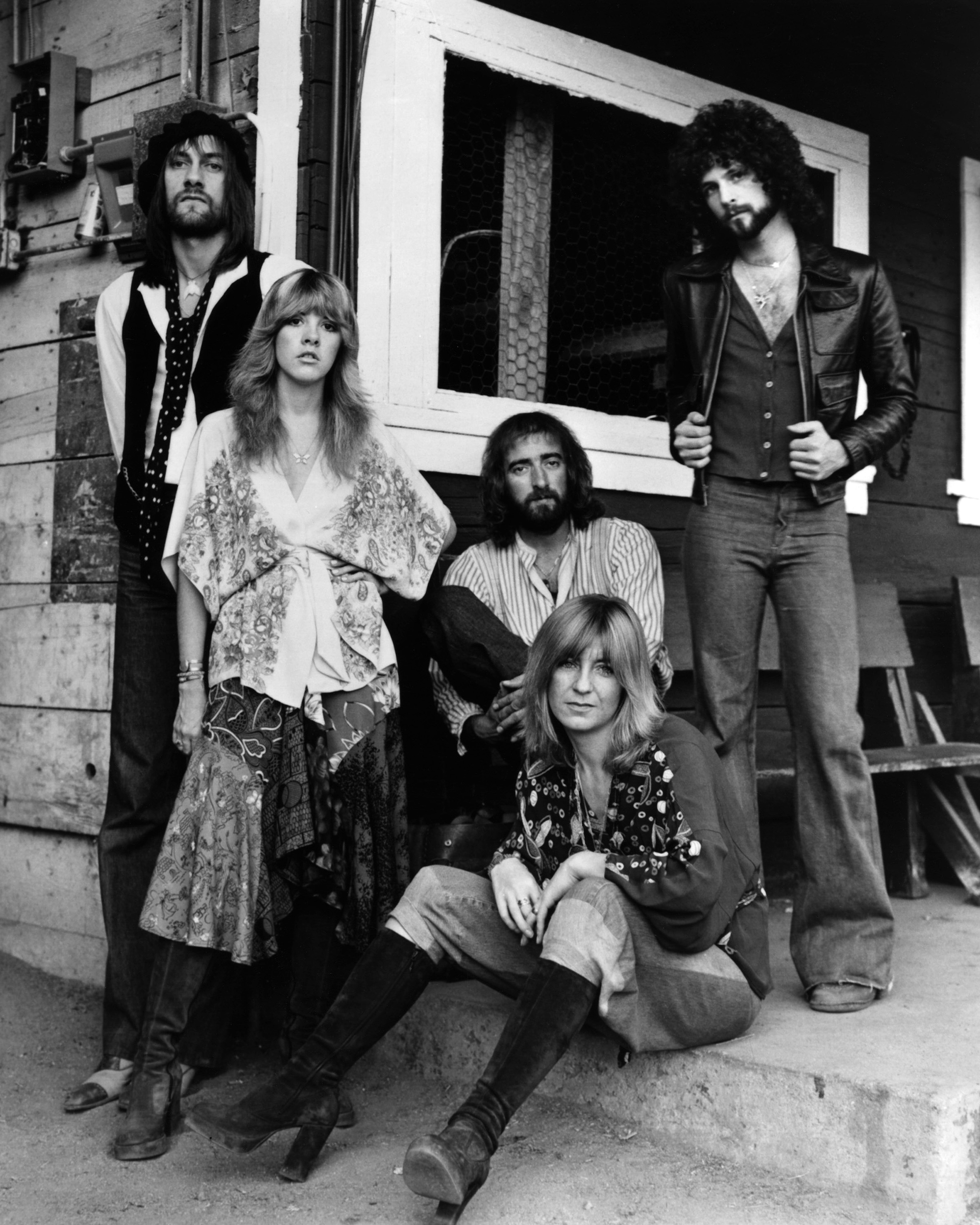
In the late 1970s, the music world was still reeling from the colossal, polished success of Rumours. Fleetwood Mac had become the biggest band on the planet, bathed in gold records and fueled by internal heartbreak. Yet, as the industry geared up for the disco-saturated airwaves of the new decade, one man was quietly plotting a sonic mutiny. Lindsey Buckingham, the band’s restless architect, became obsessed with escaping the shadows of their own perfection. He didn’t want to repeat the past; he wanted to dismantle it, leading the group toward a chaotic, experimental gamble that would go down in history as one of rock’s most controversial masterpieces: Tusk.
Lindsey Buckingham’s vision was nothing short of fanatical. While the band was accustomed to the refined, radio-friendly production that had defined their golden era, Buckingham began pushing them toward a raw, disjointed, and percussive sound that felt like a direct assault on the traditional pop sensibility of the time. He retreated into his own world, crafting strange home demos and demanding that his bandmates—already frayed by their own intricate personal dramas—follow him into uncharted territory. At one point, he famously dragged in an entire marching band to record the title track, a move that left the rest of the group bewildered and the studio technicians questioning his sanity.
The tension in the studio became a physical presence. The legendary rapport that had fueled Rumours was replaced by a volatile creative friction. Lindsey Buckingham was no longer looking for a hit; he was looking for a revolution, and he didn’t care who he alienated in the process. He forced the band to record in ways that felt counter-intuitive, stripping away the smooth harmonies that had made them household names and replacing them with jagged textures and primal rhythms. For a band that relied on the delicate chemistry of five distinct personalities, Buckingham’s uncompromising drive was a pressure cooker waiting to explode.
Looking back, it is easy to see that Tusk was the sound of a man trying to outrun his own shadow. It was an expensive, messy, and deeply personal odyssey. When the album finally hit the shelves, it didn’t enjoy the instant, universal adoration of its predecessor. It was too weird, too long, and too daring for many who were still hoping for Rumours Part Two. Yet, over the decades, the perception has shifted. Today, the album is celebrated as a daring departure—a testament to the fact that greatness often requires a willingness to risk everything, even the status of being the world’s most successful band.
Today, Tusk stands as a monument to the era of excess and the singular, maddening brilliance of Lindsey Buckingham. It serves as a reminder that the music we love most isn’t always the easiest to digest; sometimes, it is the product of a brilliant mind daring to break everything just to see what kind of music might emerge from the wreckage. If you listen closely to those tracks today, you can still hear the ghosts of the late seventies, the hum of the analog gear, and the sound of an artist pushing his band to the absolute edge of their limits.