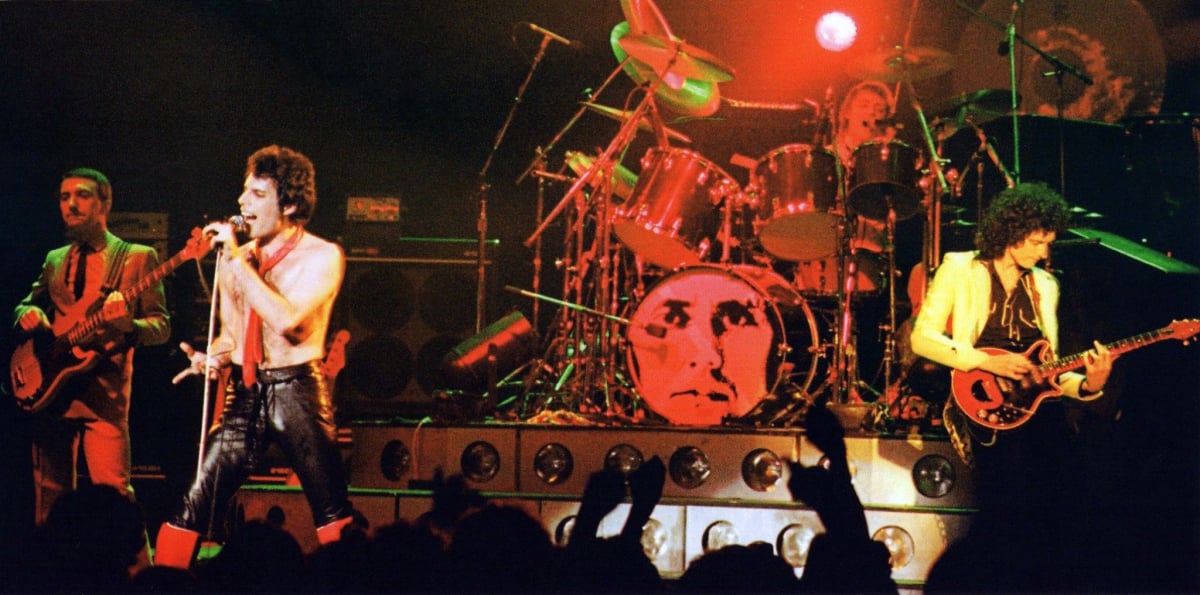
It was 1975, and the music industry was governed by rigid, unwritten laws. Radio executives demanded three-minute pop ditties, nothing more, nothing less. When Queen presented their six-minute masterpiece, Bohemian Rhapsody, the suits at the record label were horrified. They claimed the song was far too long, too experimental, and entirely unplayable for the airwaves. They demanded that Freddie Mercury and his bandmates hack away the operatic middle section to make it radio-friendly. But Freddie Mercury was never one to bow to corporate pressure or compromise his artistic vision. He knew he had captured lightning in a bottle, and he refused to let their creation be butchered for the sake of a rotation spot.
Behind closed doors, a quiet rebellion was brewing. Mercury didn’t just walk away; he plotted. He managed to smuggle a copy of the uncut masterpiece to Kenny Everett, a wildly popular DJ and a close friend. The instructions were simple but defiant: do not play it. Of course, this was a masterful piece of reverse psychology. Everett knew exactly what he was doing. He teased the song on his show, playing tiny, tantalizing snippets until his listeners were practically begging to hear the full version. The tension built until the inevitable moment when Everett ‘accidentally’ played the entire six-minute track.
The impact was immediate and seismic. Telephone lines at the radio station lit up instantly, with fans demanding to know what that extraordinary, genre-bending song was. It was a moment of pure, unadulterated rock and roll rebellion that forced the hand of the record label. They had no choice but to release the song exactly as Queen intended. This legendary act of sabotage didn’t just change the fate of one track; it permanently altered the landscape of 1970s radio history. It proved that audiences were far hungrier for complexity and drama than the industry leaders ever dared to believe.
Bohemian Rhapsody remains a haunting testament to that golden era of music. When we listen to it now, through the nostalgic lens of decades past, we can still hear the sheer audacity of it all. It transports us back to a time when music was an event, a cinematic experience that demanded your full attention. The harmonies, the operatic crescendos, and that unmistakable Freddie Mercury vocal performance remind us why Queen stands as one of the greatest bands in human history. They didn’t just make hits; they reshaped the boundaries of what pop music could achieve.
Today, the story of this secret leak serves as a reminder of the power of artistic integrity against the sterile calculations of the industry. Even in an age of instant streaming and algorithmic perfection, the defiant spirit of 1975 feels more vital than ever. The next time you hear those iconic piano chords, remember the quiet revolution that happened in the shadows. It is more than just a song; it is a monument to the moment Queen chose to risk it all, forever changing the way we hear music.