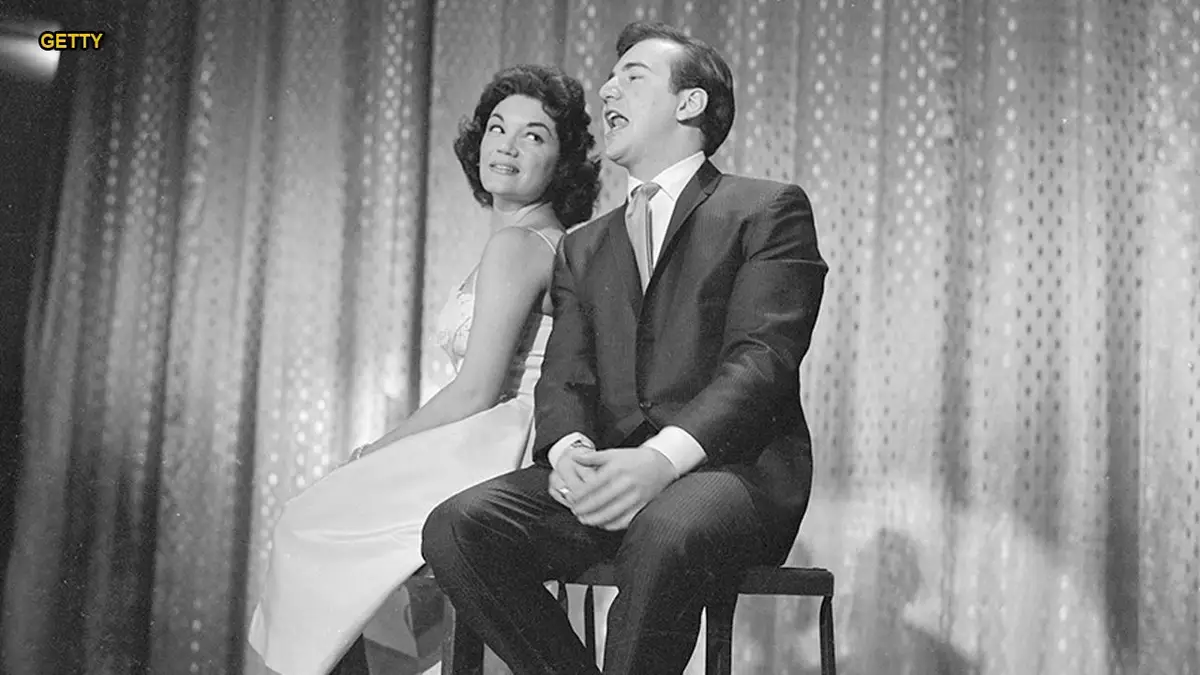
It was 1957, a time when the jukebox was the pulsing heart of every diner and the airwaves crackled with the budding promise of rock and roll. Amidst the golden haze of post-war Americana, two rising stars were secretly weaving a fairytale of their own. Connie Francis, the sweetheart of pop, and the charming, ambitious Bobby Darin were deeply in love, planning a future that seemed destined for the bright lights of stardom. They were young, successful, and inseparable, but the music industry’s glamorous facade often masked a darker, more volatile reality behind closed doors.
The romance between Connie Francis and Bobby Darin was never meant to be a simple tabloid headline. It was an intense, private connection that thrived away from the frantic glare of the press. However, their burgeoning relationship collided violently with the protective, overbearing presence of Connie’s father, George Franconero. One night, the intensity of their young love encountered a terrifying, irreversible turning point. In a moment of suffocating tension, Connie’s father pulled out a gun, an act of desperate intimidation that shattered the couple’s innocence and ultimately forced them apart. It was a harrowing trauma that would linger in Connie Francis’s heart for the rest of her life.
Looking back at the late 1950s, it is easy to view the era through the rose-colored lens of clean-cut haircuts and sock hops, but the story of Connie Francis and Bobby Darin serves as a stark reminder of the hidden scars left by the pursuit of fame. While Bobby Darin would eventually go on to achieve monumental success with hits like Mack the Knife, the emotional toll of that night left a permanent fracture. For Connie, the memory of that loaded gun remained a ghost that haunted her memories of Bobby long after they parted ways, leaving behind a legacy of what might have been.
This dramatic clash between personal freedom and traditional authority was not uncommon in the rigid cultural landscape of the Eisenhower era. Yet, the story remains particularly poignant because of the sheer talent involved. Connie Francis was a powerhouse of vocal emotion, and Bobby Darin was an artist who could effortlessly bridge the gap between teen idol and sophisticated crooner. The fact that their personal journey was cut short by such a violent, uncharacteristic outburst adds a tragic layer to their musical catalogs. Every song they sang afterward was tinged with the unspoken sorrow of a love that was forcibly dismantled by a father’s hand.
Decades later, as we look back at the icons of the 1950s and 60s, the story of Connie Francis and Bobby Darin continues to resonate. It reminds us that our legends were real people who navigated immense pressures, both from the industry and their own families. Their secret engagement was a brief flicker of joy that was extinguished far too soon, leaving us to wonder how their shared path might have changed the course of music history. As the sun sets on the era of the jukebox, let us remember their story not just for the hits, but for the haunting, human truth behind the velvet curtains.