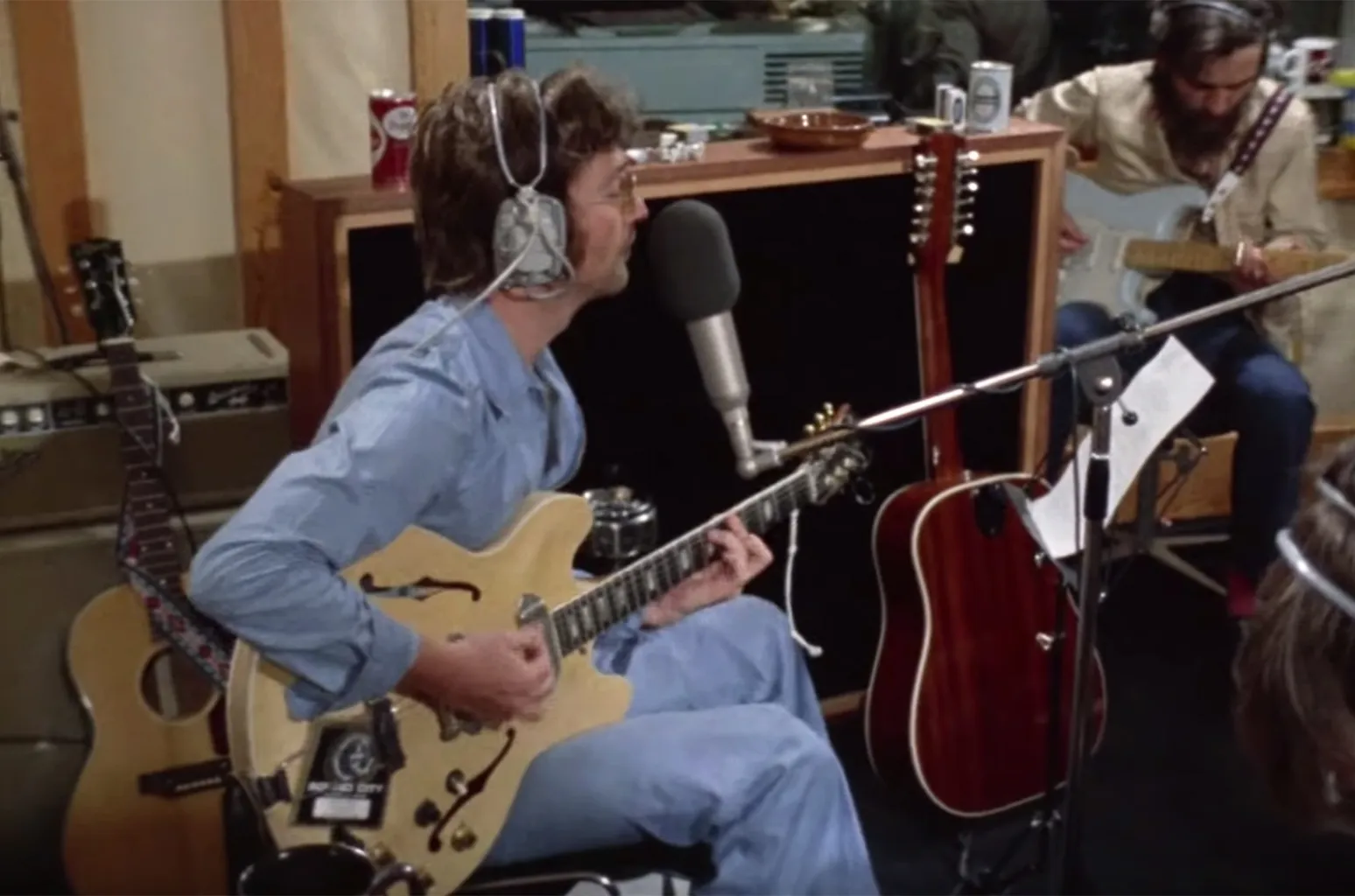
It is 1970, and the world is mourning the official collapse of The Beatles. Amidst the debris of a broken band, John Lennon steps into the spotlight with a message that sends shivers down the spines of the British establishment. Most fans expected a soft, melodic farewell, but instead, they got a weaponized piece of poetry titled Working Class Hero. Almost immediately, the song was targeted for censorship. It was not just the raw, coarse language that offended the radio censors; it was the relentless, unapologetic honesty that stripped the veneer off the entire British class system. It was as if John Lennon had finally decided to pull the curtain back on the cage he had been living in for years.
The genius of the track lies in its simplicity. With just an acoustic guitar and that signature, haunting voice, John Lennon speaks directly to the listener, whispering secrets that were never meant to be heard in polite society. He tells us that we are all born into a world designed to keep us small, to keep us productive, and to keep us quiet. For those who grew up in the shadow of the post-war industrial era, the lyrics hit with the force of a wrecking ball. He wasn’t just singing about being a laborer; he was highlighting the psychological imprisonment that comes with societal expectations. It was a cry for rebellion that resonated deeply with the disenfranchised masses who had been told to fall in line.
Why was it so dangerous? Because John Lennon was one of the most famous people on the planet at the time, and he was biting the hand that fed him. The media of the 1970s did not know how to handle an icon who was willing to call his own fame a hallucination. He exposed the dark underbelly of the fame he had spent a decade chasing, revealing that the gold-plated prison of celebrity was just another way to suppress the individual spirit. He was accused of hypocrisy, of being a millionaire preaching about the poor, but that only added to the mystery and the public fervor surrounding his artistic transition.
Looking back from our modern perspective, the song feels like a prophetic warning. We still grapple with the structures that dictate our worth and our potential. The bitterness in his voice when he sings about being doped with religion and sex and TV is a sting that hasn’t dulled with time. It remains a raw, authentic document of a man trying to exorcise his own demons while holding a mirror up to a complacent society. Even decades later, it remains one of the most provocative pieces of music ever captured on tape.
Do you remember where you were when you first heard those opening chords? For many, it was the moment they realized their hero was actually a human being, flawed and furious. The song still stands as a testament to the power of one voice speaking truth to power. While the censors tried to bury the message, the music survived, immortalized as the ultimate anthem for the restless soul. John Lennon may be gone, but his battle against the status quo continues every time the record needle drops and the haunting melody begins to play once again.