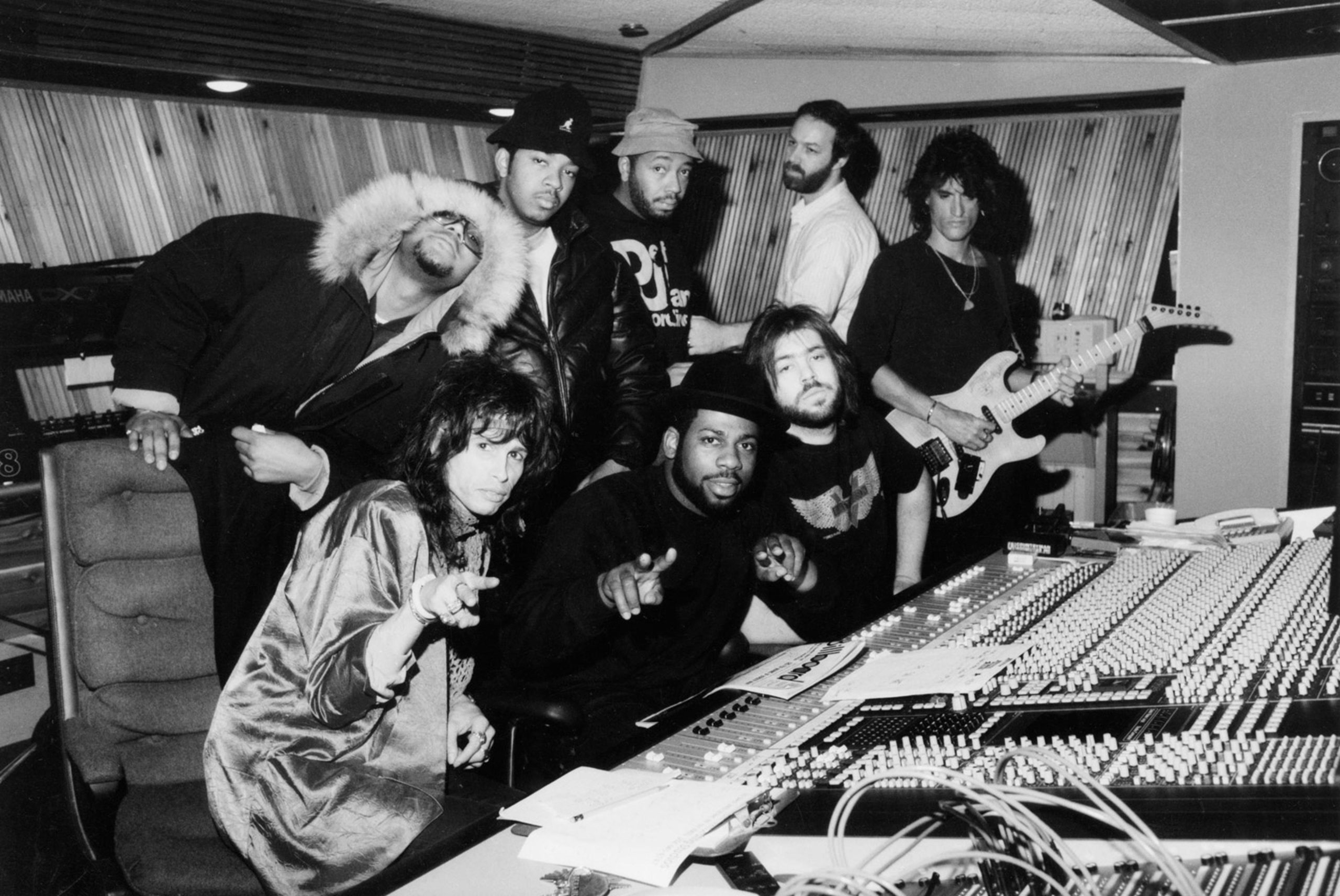
It was 1986, and the airwaves were strictly segregated. If you listened to rock, you stayed in your lane; if you listened to rap, you existed in an entirely different universe. But inside the cramped, smoke-filled studios of New York City, a quiet revolution was brewing. Rick Rubin, the eccentric producer with an ear for the impossible, had a vision that seemed like professional suicide. He wanted the rap pioneers Run-D.M.C. to cover Aerosmith’s legendary track Walk This Way. To the members of Run-D.M.C., the idea was borderline insulting. They were the kings of the streets, the pioneers of the drum machine beat, and they flatly refused to touch a song that felt like it belonged in a dusty rock archive.
The tension in the studio was thick enough to cut with a blade. Run-D.M.C. found the concept of melding their hard-hitting, aggressive hip-hop flow with Steven Tyler’s bluesy wail completely foreign. They saw it as a dilution of their craft, a departure from the authentic sound that was making them the biggest stars in rap. Yet, Rick Rubin was relentless. He wasn’t just a producer; he was a cultural architect who thrived on friction. He believed that the power of music wasn’t in the genre, but in the attitude. He pushed, he cajoled, and he ultimately forced a collaboration that would soon become the most unlikely marriage of rap and guitar in music history.
When the recording finally happened, it felt like the birth of a new era. The moment that iconic drum break met the jagged, stinging rhythm of the electric guitar, something cracked open in the American consciousness. This wasn’t just a song; it was a wrecking ball aimed directly at the color lines of 80s radio. MTV, which had been notoriously reluctant to play black artists, suddenly had no choice. The video, depicting the two groups literally breaking down the wall between their respective recording studios, became an iconic image of the decade. It wasn’t just a hit; it was a cultural pivot point.
Beyond the chart success and the heavy rotation on every Walkman in the country, the success of Walk This Way cemented the status of both Rick Rubin and Run-D.M.C. as visionaries. They proved that the rigid boundaries of radio programming were merely illusions. For a generation of fans watching from their living rooms, it was the first time the worlds of hard rock and hip-hop collided, setting the stage for decades of musical experimentation to follow.
Looking back today, the story feels like a fable of the golden age of music production. It serves as a reminder of a time when industry titans took real risks, challenging their artists to leave their comfort zones to create something truly transformative. Rick Rubin and Run-D.M.C. didn’t just record a song; they dismantled a wall that had stood for far too long, changing the sound of American radio forever. Next time you hear that familiar guitar riff, take a moment to listen for the echo of that historic, high-stakes collision.