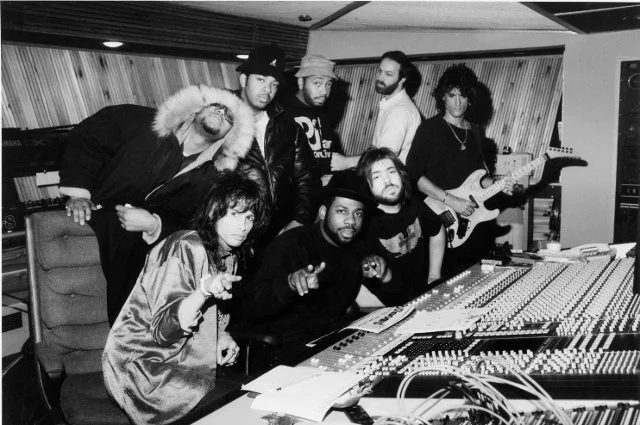
By 1986, the once-mighty stadium rockers Aerosmith were, by all accounts, a fading memory. Their records were gathering dust in bargain bins, and their professional lives were spiraling under the weight of substance abuse and internal feuds. They were the quintessential rock icons in decline, trapped in the ghost of their own past. Across the musical landscape, a raw, aggressive sound was emerging from the streets of New York: hip-hop. It was a world away from the leather-clad antics of Boston rock stars, yet fate, or perhaps a stroke of pure genius, led them to the same recording booth. The resulting cover of Walk This Way did more than just breathe life into a tired hit; it shattered the color barrier on MTV and proved that the lines between genres were meant to be blurred, if not completely erased.
The collaboration was born from the unlikely vision of producer Rick Rubin, who saw potential in the rhythmic DNA shared by both rock and rap. When Run-DMC first arrived at the studio, they were skeptical. Aerosmith members Steven Tyler and Joe Perry were similarly hesitant, having little context for what hip-hop actually was. The atmosphere was thick with tension; the clash between two different musical worlds felt like an experiment destined to fail. As the recording began, the legendary guitar riff collided with the percussive, syncopated flow of Run-DMC, and the air in the room fundamentally changed. It was the sound of a cultural wall coming down, brick by brick, in real-time.
MTV at the time was a gated community, rarely playing Black artists and struggling to find its footing after the initial glam rock explosion. By forcing a visual and sonic union of Run-DMC and Aerosmith, the network was compelled to broaden its horizon. The music video became an instant classic, showing the literal destruction of the wall separating the two groups. It was a powerful, symbolic moment that echoed through the golden age of hip-hop and gave Aerosmith the legendary comeback they desperately needed. Suddenly, the Walkman-toting youth of the eighties were listening to the same anthem as their parents, creating a bridge across generations.
The impact of this collaboration cannot be overstated. It essentially wrote the blueprint for the alternative rock and rap crossovers that defined the nineties. Aerosmith transitioned from has-beens to global superstars once again, while Run-DMC solidified their status as pioneers who could conquer any audience. Beneath the surface, the story of this union is a testament to the power of musical curiosity. It reminds us that even when the lights seem to be dimming on a legacy, a single, risky collaboration can reignite the spark.
Looking back, this 1986 experiment remains a fascinating study of artistic survival. It captures the frantic energy of a decade obsessed with new sounds and the resilience of artists willing to step into the unknown. Whenever you hear the iconic opening drum beat of that track today, you are listening to a moment that changed the industry’s trajectory. It is a timeless reminder that music is at its best when it refuses to stay inside the lines. What other walls might we tear down if we only had the courage to listen?