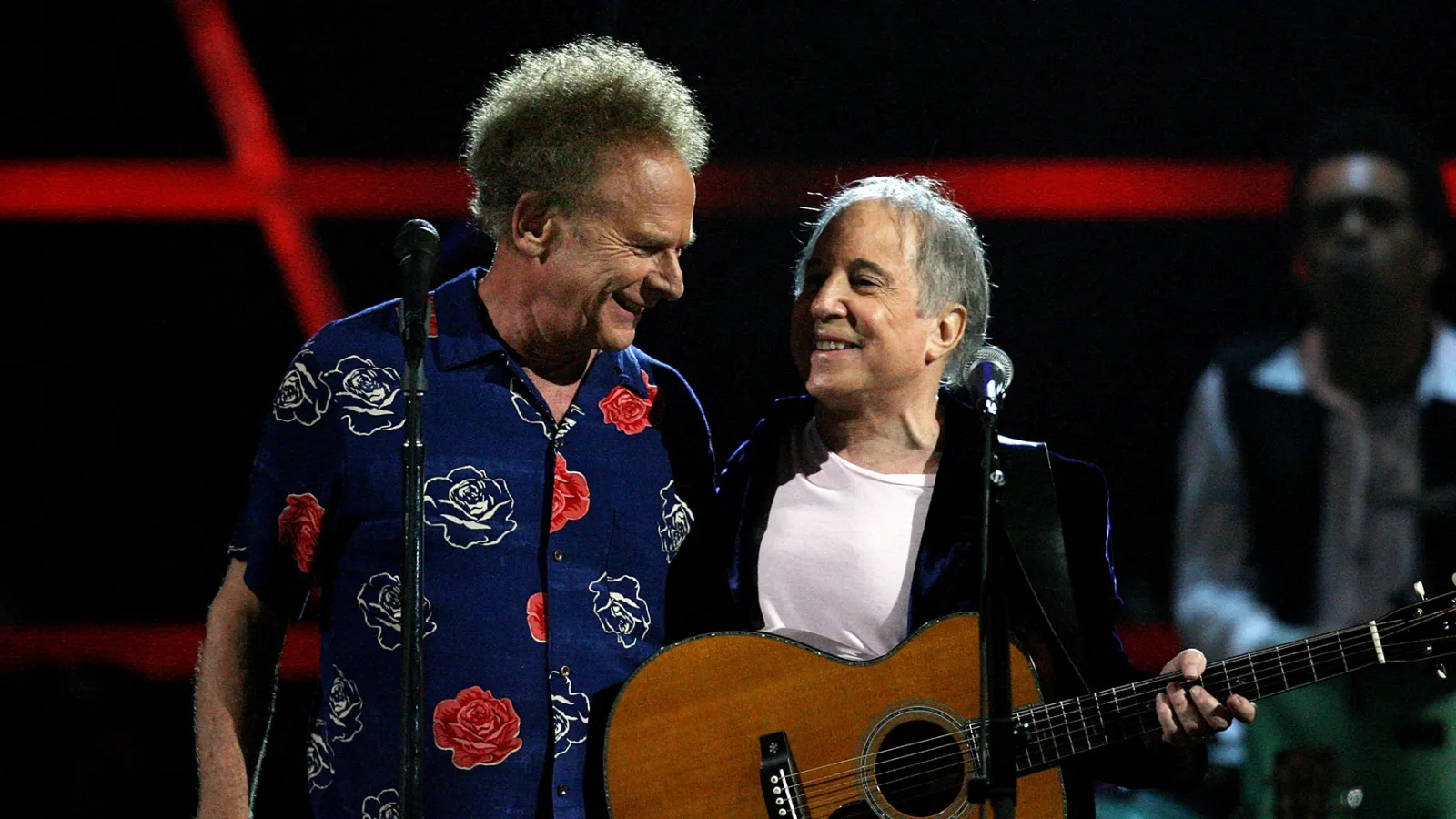
On a crisp September evening in 1981, over half a million people descended upon Central Park. They were drawn by the magnetic promise of a musical homecoming, a chance to hear the crystalline harmonies of Simon and Garfunkel once again under the New York sky. As the iconic duo stood before the massive crowd, the audience wept, cheered, and felt the warm embrace of nostalgia. To the spectators, it was a dream revived—a triumph of folk-rock legacy that seemed to bridge the gaps of time and distance. But behind the velvet curtains and the roaring applause, a far more fragile and chilling reality was unfolding. While the world saw two brothers in song, the silence backstage spoke a different, much darker language.
For those who lived through the era, Simon and Garfunkel were more than just musicians; they were the architects of a generation’s soundtrack. Their rise in the 1960s was meteoric, defined by poetic lyrics and the kind of vocal chemistry that felt almost supernatural. Yet, by the time they walked onto that stage in 1981, years of professional friction and personal resentment had long since eroded their foundation. The Central Park concert was intended as a grand reconciliation, a way to heal the wounds that had led to their bitter breakup a decade earlier. Instead, it became a poignant testament to the fact that some harmonies are destined to remain broken.
Throughout the rehearsals and the final performance, the tension between Paul Simon and Art Garfunkel was palpable, thick enough to suffocate the joy of the event. Reports from the inner circle revealed that the two men barely spoke to each other outside of their required stage cues. They were two masters of their craft performing in perfect synchronicity, yet they were effectively strangers navigating a battlefield. The unspoken animosity was the shadow beneath the bright stadium lights, proving that even as they belted out Bridge Over Troubled Water, they were standing on entirely different islands of pride and grievance.
This bittersweet performance remains one of the most compelling dramas in rock history. It highlights the brutal cost of fame and the heavy price of ego within creative partnerships. It stands in stark contrast to the effortless, sun-drenched vibes of the 1960s folk scene from which they emerged, reminding us that the artists we idolize are often trapped by the very expectations we place upon them. The 1981 reunion proved that even when the music survives, the people behind the microphone are susceptible to the human frailties of exhaustion and unresolved discord.
Today, when we spin our vintage vinyl or hum those familiar melodies, we are hearing more than just notes; we are hearing the echo of an era that changed the world. We look back at Simon and Garfunkel not just for the perfection of their sound, but for the raw, human complexity of their relationship. Their story serves as a haunting reminder that while music is eternal, the bonds between the creators are often fragile and fleeting. Perhaps it is this hidden heartache that makes their songs feel so intensely resonant, even decades later.