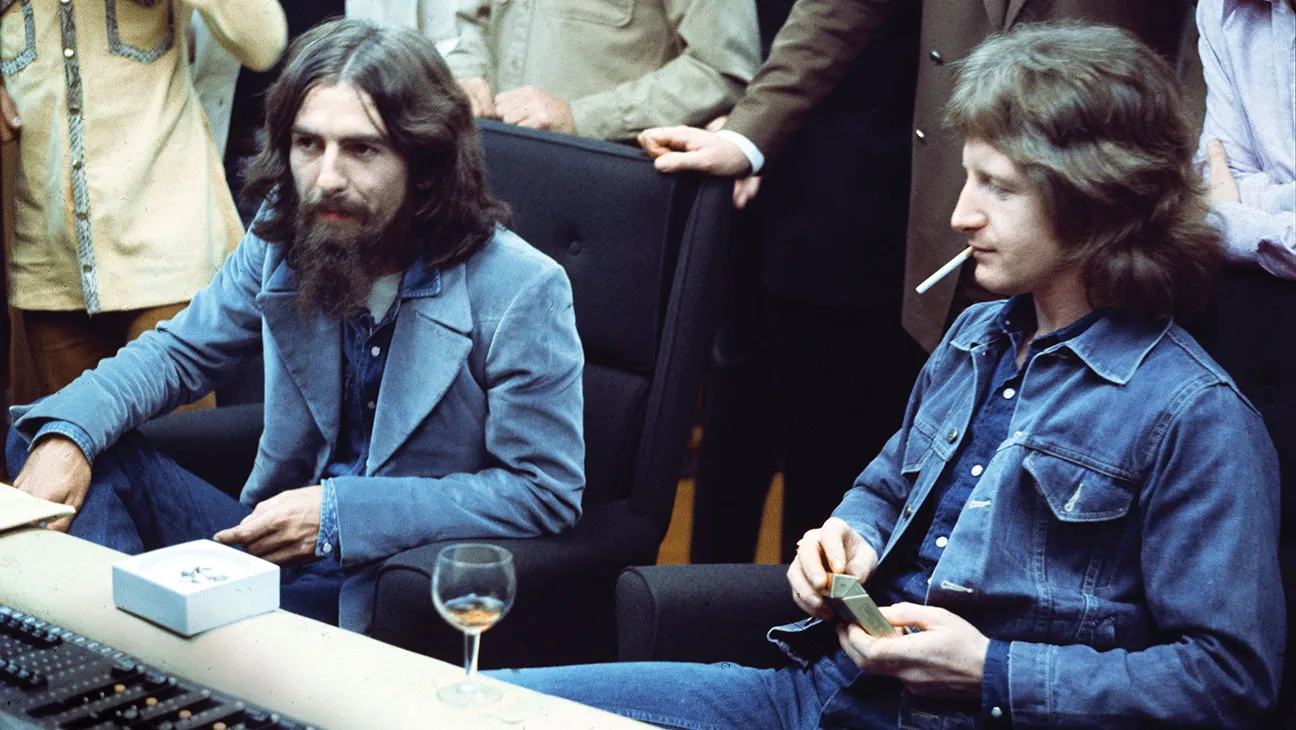
George Harrison’s first U.S. No. 1 after The Beatles became a courtroom trap — did “My Sweet Lord” copy The Chiffons’ “He’s So Fine” without him knowing? That question was whispered in living rooms and tabloids in the 1970s, turning a devotional anthem into one of the most sensational music trials of the era. It’s a story of faith, fame and a melody that crossed lines nobody expected.
By 1970, George Harrison had stepped out of the long Beatles shadow with All Things Must Pass, and “My Sweet Lord” felt like a benediction: simple, sincere and unmistakably his. For millions — Generation X parents and Baby Boomers who kept vinyl on their consoles — that song was a moment of spiritual lift. But behind the warmth of Hammond organ and slide guitar lay a musical echo that would be dissected under the harsh gaze of the courtroom.
The Chiffons’ “He’s So Fine,” written by Ronnie Mack and a 1963 chart-topper, provided the note of controversy. Bright Tunes Music Corp. sued Harrison in the landmark case Bright Tunes Music Corp. v. Harrisongs Music, Ltd., arguing that the melody and the now-famous three-note hook of “He’s So Fine” were mirrored in “My Sweet Lord.” In 1976 a federal judge shocked the industry by ruling that Harrison had committed “subconscious plagiarism” — not deliberate theft, the court said, but copying that occurred without the artist’s awareness.
The verdict felt almost Shakespearean: the spiritual purity of a prayer accused of theft. George Harrison insisted — before fans, reporters, and in quieter interviews — that “My Sweet Lord” was a genuine devotion, not a rip-off. Yet the legal machinery marched on, damages were awarded and a triumphant solo milestone became a cautionary tale about influence and ownership. For listeners who loved that record, the case exposed the fragile underside of celebrity and the strange ways memory and music can collude.
What keeps the Harrison/Chiffons saga alive for those who grew up with AM radio and early MTV is its human contradiction. We recognize the same notes, the same reach for transcendence, and then we learn how the business of copyright can turn art into litigation. The Chiffons’ “He’s So Fine” and George Harrison’s “My Sweet Lord” now exist forever linked — one a sugary pop youth anthem of the early ’60s, the other a weathered adult’s spiritual yearning — both stamped by a courtroom decision that still sparks debate among musicians, lawyers, and fans.
So next time you drop the needle or scroll through a playlist, listen for the three-note line that changed a legend’s life. Was it homage, coincidence, or something stranger — a melody lodged in the subconscious and given new shape by a broken world of fame? George Harrison and The Chiffons left us two songs that, together, tell a louder story about the costs of genius. Decide for yourself — the music still plays, but history has given it a darker echo.