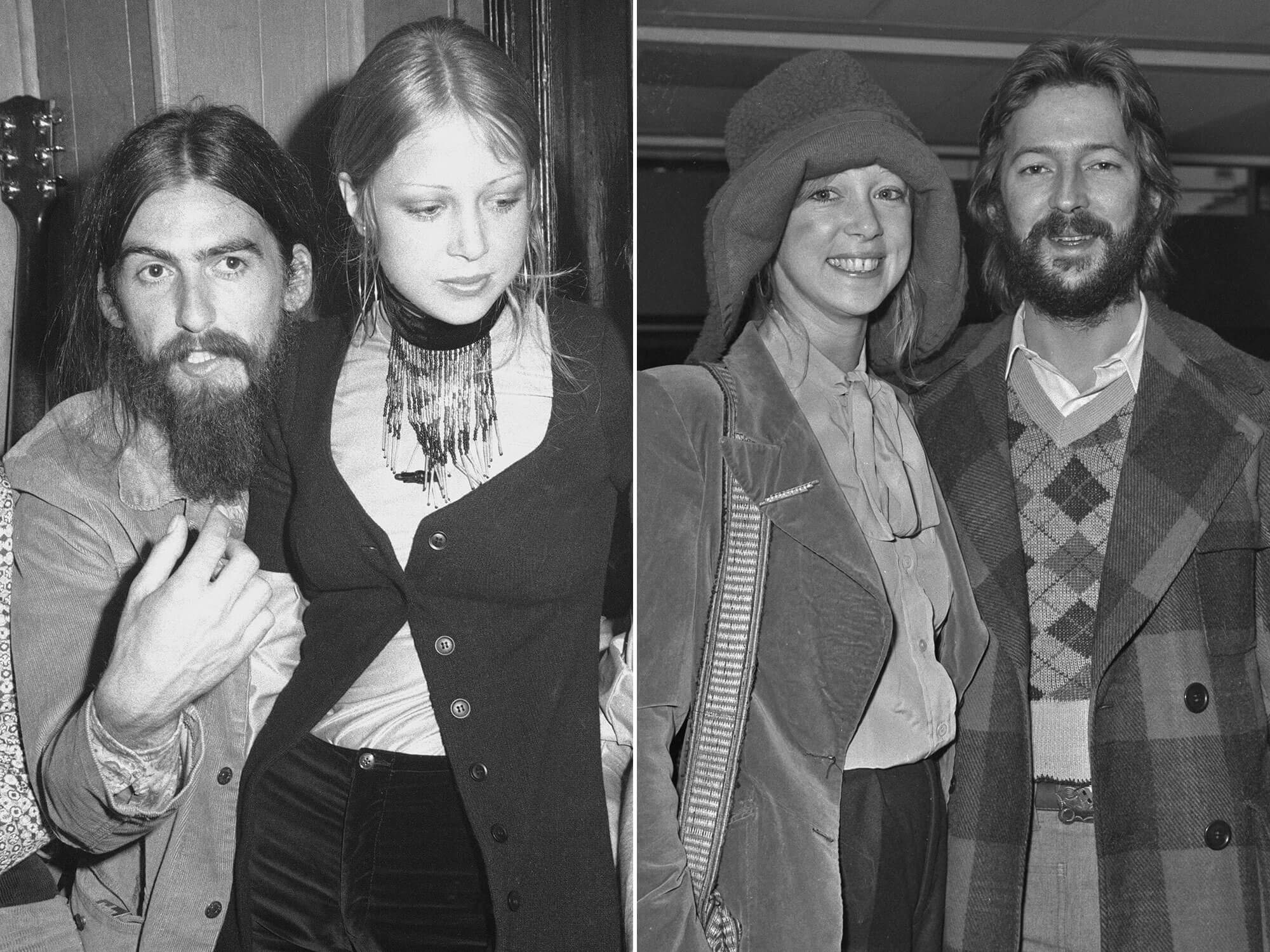
Who really was Eric Clapton singing to when he howled the first desperate lines of “Layla”? That single question opens a scandalous door into rock history that the tidy headlines of the time tried to sweep under the carpet. Derek and the Dominos didn’t just record a great song in 1970—they hid a confession inside a guitar riff, a plea that was aimed straight at Pattie Boyd, the wife of Clapton’s close friend George Harrison.
By the time Layla and Other Assorted Love Songs landed, the late-’60s myth of brotherhood among rock stars was already fraying. Eric Clapton, newly reborn as the anguished voice of Derek and the Dominos, poured obsession into an arrangement that moves from brittle electric pain into an aching piano coda. He was no anonymous songwriter; he was a friend, a fellow Beatle-era raconteur’s confidant, and he was falling hard for Pattie Boyd—George Harrison’s wife—turning private longing into public myth.
The backstory reads like a tragic novella. Clapton had known George Harrison since the mid-’60s; the three of them—Clapton, Harrison and Pattie—passed through the same London salons and touring circuits. Pattie Boyd was idolized as a muse: photographer-turned-model, the subject of more than one famous love song. Eric’s fixation ran deep and brutal. He took the Persian love poem Layla and Majnun as his model, disguising his real plea in mythology and melody. The press liked to call it art; those close to the situation called it raw confession.
Recording the album amplified the drama. The sessions were soaked in whiskey and heroin, and the band—Bobby Whitlock, Carl Radle, Jim Gordon—was fraying at the edges. Duane Allman’s slide guitar famously cut through the pain and gave “Layla” its anguished voice, while Jim Gordon’s piano coda sent listeners into the quiet collapse at the song’s end. Yet behind those brilliant performances were arguments, jealousy, and the slow, corrosive pull of addiction. Derek and the Dominos dissolved almost as quickly as they rose, casualties of brilliance pushed to the brink.
What the music papers downplayed was the personal fallout. George Harrison learned of Clapton’s feelings—some accounts say he smiled and offered his blessing, others say it left a residue of awkwardness that never fully healed. Pattie Boyd’s silence and later choices complicated the narrative; she eventually left Harrison and married Clapton years later, an outcome that only deepened the story’s tragic irony. Songs like “Wonderful Tonight,” written by Eric years later, became more than hits; they were diary entries made public.
Decades later, “Layla” still sounds like a message in a bottle. When you hear those first lacerating chords and the voice that seems to split in two between rage and begging, you’re listening to one of rock’s most notorious love triangles—Eric Clapton, Pattie Boyd and George Harrison—laid bare. Put the record on again and listen for the confession between the notes; the secret the tabloids once softened is still raw, and it keeps pulling at the heart of anyone who remembers what that era felt like.